
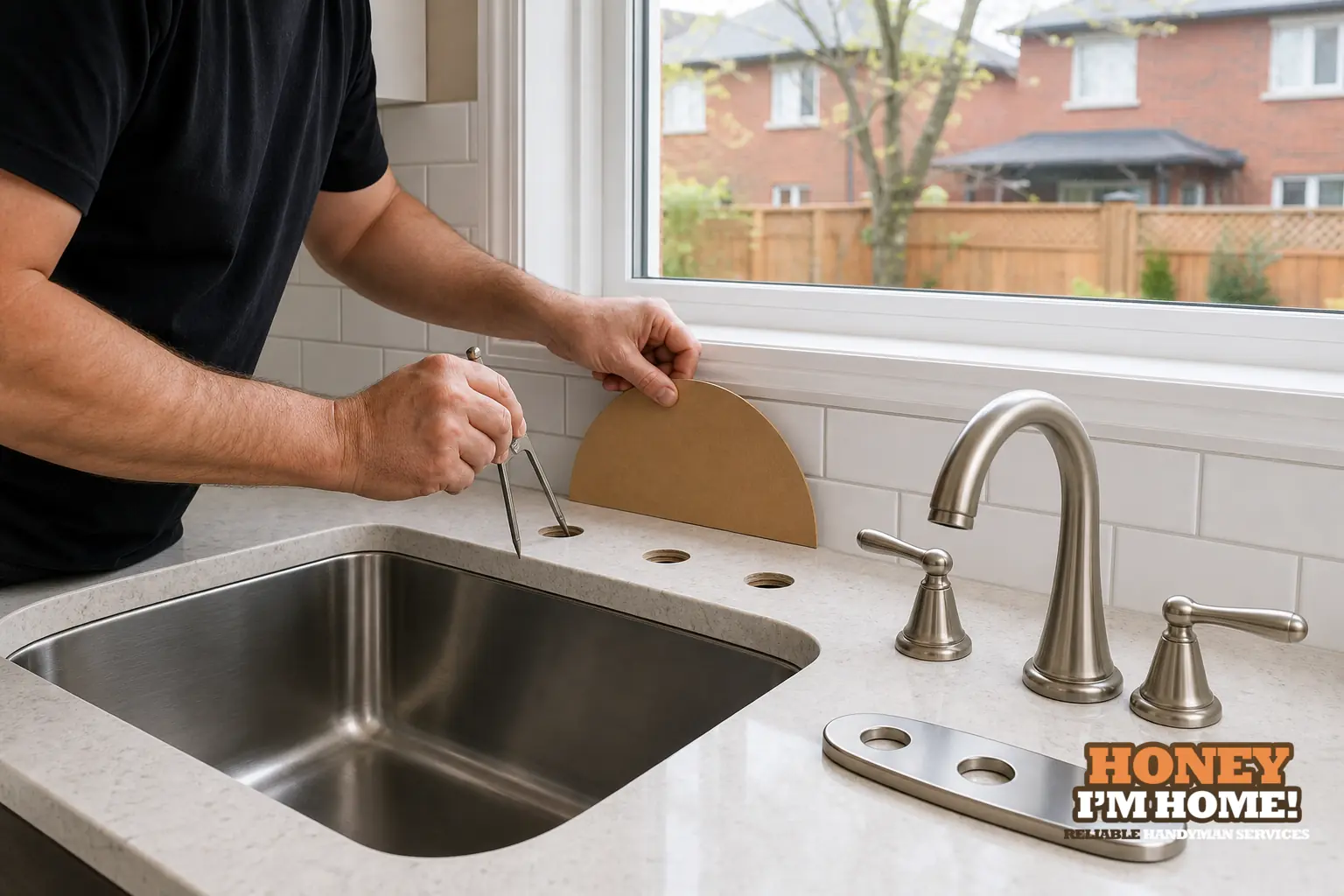
Short answer: check the sink’s hole pattern, deck condition and handle clearances before you buy. I verify whether the existing opening will accept the faucet shank and hoses, whether unused holes need a proper cover or device, and whether the base will seat securely so the new fixture works and looks right without surprise cutting or patching.
Why the sink hole pattern controls your options
The visible holes in a sink or countertop aren’t just cosmetic—they tell me which faucets can be installed without altering the surface. Single‑hole, three‑hole centreset and widespread bases all need different mounting points. The deck edge, rim profile and material thickness affect how the faucet clamps and seals. If a new faucet’s base sits on an irregular rim or a raised escutcheon, it may not seal or sit level without modification.
There are two straightforward realities to accept early in planning: if an existing hole is too small for the faucet shank, you either choose a model that fits or discuss enlarging the opening; if the existing hole or footprint is noticeably larger than the faucet base, the correct solutions are a deck plate/escutcheon or picking a faucet with a wider base. An escutcheon won’t make a too‑small opening larger, and a hole that’s too large requires a proper cover or device rather than an improvised patch.
What I inspect and why I measure on site
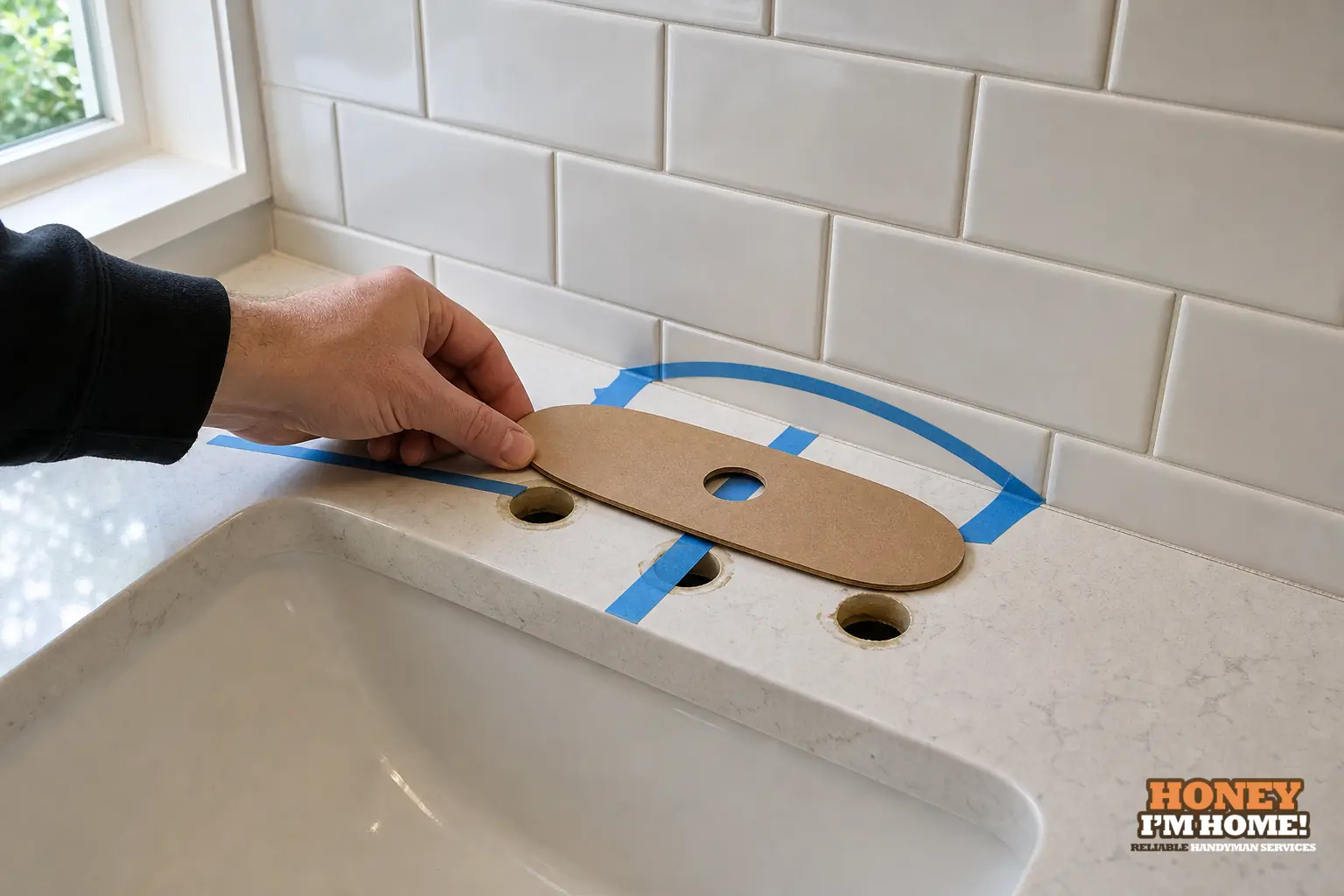
My first step is visual and hands‑on. I look at the hole count and spacing, check the underside for clearance where the mounting nut and hoses will sit, and note any nearby obstructions—backsplash, window sill, or low cabinet framing. I also check the condition of the deck around the holes: hairline rot, delamination or crumbling edges change the recommended approach.
Under the sink I confirm the path for the faucet shank and hoses so nothing binds or presses on fittings. I check the accessibility of supply shutoffs and whether the existing supply connections will mate cleanly with braided hoses or need an adapter. I do not make assumptions about modern standard dimensions; I measure profiles and transitions so the choice of mounting hardware and trim is deliberate.
Common fit problems and correct, practical solutions
These are the repeat issues that slow a straightforward fixture swap, and the practical fixes I use without overstepping into regulated alterations.
- Faucet base smaller than the existing hole footprint: use a factory deck plate, a dedicated escutcheon or select a faucet with a wider base so the opening is properly covered.
- Faucet needs fewer holes than the sink has: choose a deck plate, factory hole cover caps, or put a functional device in the spare openings such as a soap dispenser, air gap or filtered water tap.
- Existing hole is smaller than required: either select a compatible faucet or plan a safe, deliberate opening enlargement; I discuss the options and show where material will be removed so you can decide.
- Underside clearance issues: if mounting hardware interferes with the bowl or undersink framing, I select low‑profile mounting kits or hardware designed for tight clearances rather than forcing standard clamps.
- Connection mismatch: when supply valves or risers don’t line up with the new faucet shank and hoses, I plan the correct flexible supply fittings or adapters so connections are secure and accessible.
How handle clearance and operation affect faucet choice
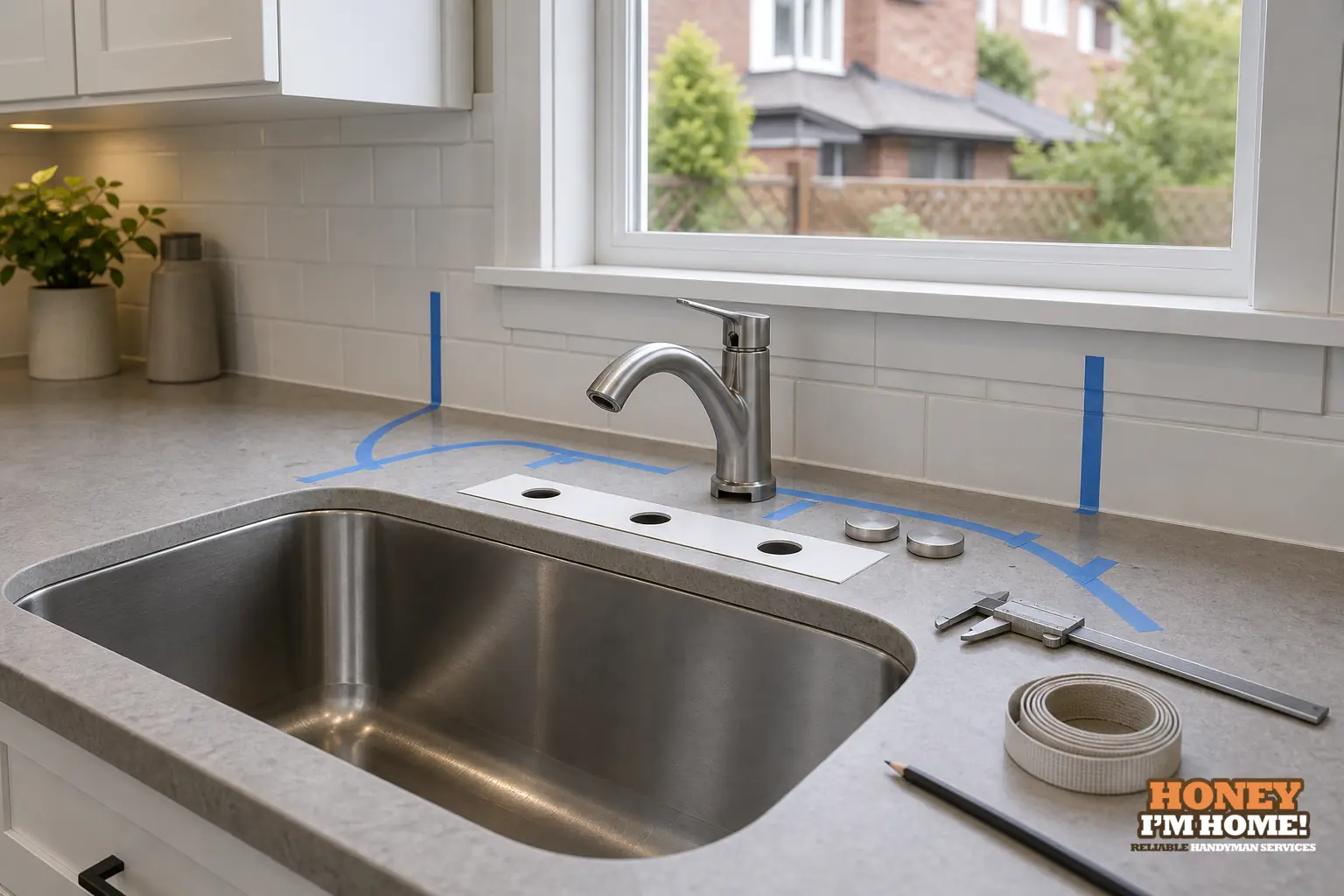
Handle swing and spout reach are design choices that become practical constraints at installation. Rather than imply post‑installation repositioning of fixed handles, I help you choose a model whose handle clearance and swing work with the existing backsplash, window sill or cabinet face. For tight clearances I’ll recommend lever or pull‑out designs with a suitable handle arc, or a single‑hole faucet that can be oriented for better clearance.
It’s a simple trade: pick a style that physically fits the space, or accept an installation that needs additional trim work. I explain those trade‑offs before we commit so the fit isn’t a surprise when the box opens.
How the housing character of Runnymede changes what I do
The Runnymede area has a lot of early‑20th‑century detached houses with Edwardian and Arts and Crafts influences, and the City’s profile reports most dwellings there were constructed before 1960. That built fabric often brings original sinks, older counters and distinctive trim around openings. I treat those original materials as elements to preserve when they’re sound.
In practical terms that means I measure existing profiles and transitions carefully instead of assuming modern dimensions will vanish into the room. A recessed sink rim, a thicker historic counter edge, or an older backsplash height will change which faucet models look right and which mounting kits will seat cleanly. Where original materials remain serviceable, I aim to bridge differences with an appropriate escutcheon or purpose‑made cover so we avoid unnecessary cutting or replacement.
Planning ahead to avoid extra cutting or a longer, more involved visit
Buying a faucet without a fit check is a frequent misstep. Preparing the right parts—mounting kits, deck plates, cover caps or the correct supply fittings—keeps a straightforward swap from turning into a longer, more involved visit. I favour bringing a selection of standard adapters and escutcheons when I assess the site so we can determine the right approach on the spot.
If you’d like a pre‑purchase check, I can assess the sink and recommend models and mounting hardware that avoid surprises. For installation details and broader fixture options see my parent service page at Plumbing & Fixture Installation, and to arrange a fit assessment contact me at /contactruss/.
Practical questions I ask and what they reveal
Before I start I ask a focused set of questions so the work stays like‑for‑like fixture replacement: which faucet model and finish you’re considering, whether the current sink or counter should be preserved, whether shutoffs are accessible, and whether any under‑sink repairs have been done before. These points tell me whether adapters will be needed, which escutcheon will cover spare holes, and whether the hose path is clear.
As we go I explain the simplest, least invasive option that achieves a clean look and reliable fit, and I point out where a small change in model or trim saves removing good original material.
Do I need to buy the faucet before you assess the sink?
No — I recommend an on‑site fit check first so you can choose a faucet and mounting kit that match the hole pattern and deck condition.
What covers spare sink holes if I switch to a single‑hole faucet?
Use a deck plate, factory hole cover caps, or install a functional device like a soap dispenser or filtered water tap to occupy the extra holes.
Can a modern faucet be adapted to an older sink opening?
Often yes; I select compatible models, use escutcheons, or discuss a safe opening enlargement if needed so the fixture seats and seals properly.