
Fence Repair in Toronto’s West End: How I Decide What Is Worth Saving
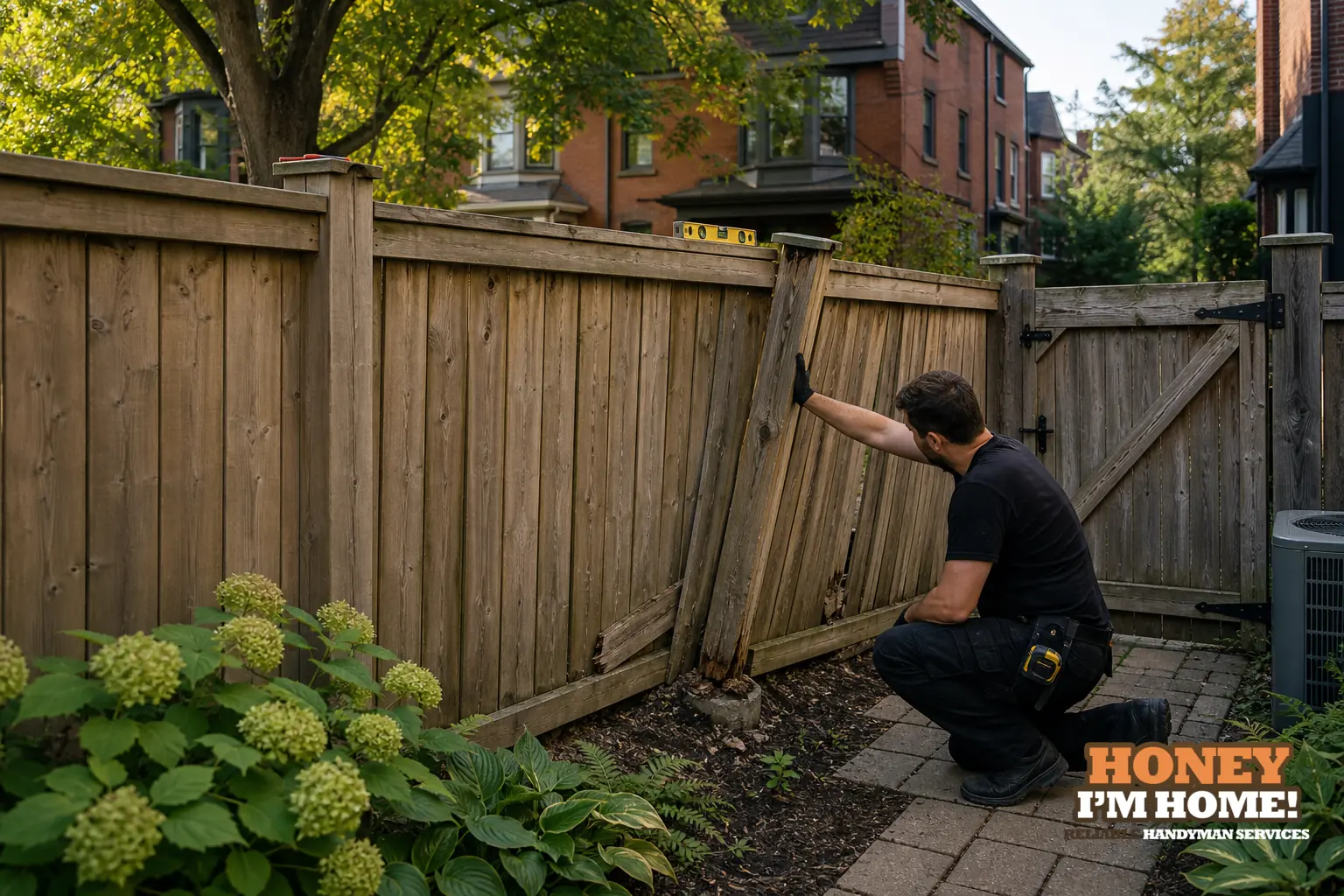
When I look at a damaged fence, I do not start by counting bad boards. I start with the posts, rails and the way the whole run moves. If the support is still good, a localized repair can make sense. If several structural parts are failing together, replacing one visible section may only hide the next problem. The useful question is how much sound fence is still there to work with.
For this guide I use Swansea as the researched local context because its residential housing mix makes sense for the kind of fence and gate work discussed here. Swansea ranges from 1880s workers’ cottages to a large layer of houses built from roughly 1905 to 1935, plus later homes and renovations. That history is useful context, but it does not tell me what any particular yard or fence looks like. I still assess the actual property, access and fence condition rather than assuming every Swansea home has the same setup.
My broader outdoor scope is on the Decks, Fences & Outdoor Projects page. This guide explains how I think through the repair-or-replace decision when I am standing in the yard.
I push on the fence before I worry about the colour
Weathered cedar can look tired and still be useful. Fresh-looking boards can also be attached to rails or posts that are moving. Appearance helps me see where to look, but movement tells me more about the condition of the system.
I check whether one post moves independently, whether several posts lean in the same direction, whether rails are pulling away and whether the fence changes noticeably when light pressure is applied. If one small section is the problem and the rest stays firm, I have something sound to connect a repair to. If the whole run moves, replacing a few boards will not change what is happening underneath.
This is why photographs of the whole fence line are more useful than five close-ups of one split board. I want to see the damaged spot, but I also want to know what it is attached to.
A gate usually tells me where the movement is
Gates exaggerate small changes. A post moves a little and suddenly the latch no longer meets. A hinge loosens and the bottom starts dragging. A frame goes slightly out of square and the homeowner starts trimming the gate when the real issue is the support beside it.
I have built a custom cedar double driveway gate that is shown in my project portfolio, and gate work reinforced something I see repeatedly: the panel is only as good as what carries it. Before changing a latch or shaving material off a dragging edge, I check the post, hinge side, frame and clearances.
A gate that operated properly for years and recently started dropping is giving information. I would rather follow that information than keep adjusting the hardware until there is no adjustment left.
Access is a property-by-property part of the repair
On a Swansea fence estimate, I do not infer access from the neighbourhood name. I look at the actual yard for narrow passages, garages, sheds, grade changes, planting or stored items close to the fence line. The physical repair may be straightforward while getting material in and out requires more planning. That matters when deciding whether a section can be rebuilt neatly without damaging everything around it.
I look at both sides of the fence where access is available. A board can look acceptable from one yard while the rail behind it is deteriorated. Plants can hold moisture against one section. Storage can hide a low area that has been failing for some time. None of that means the entire fence is finished, but it changes what I can reasonably save.
I separate weathering from loss of useful material
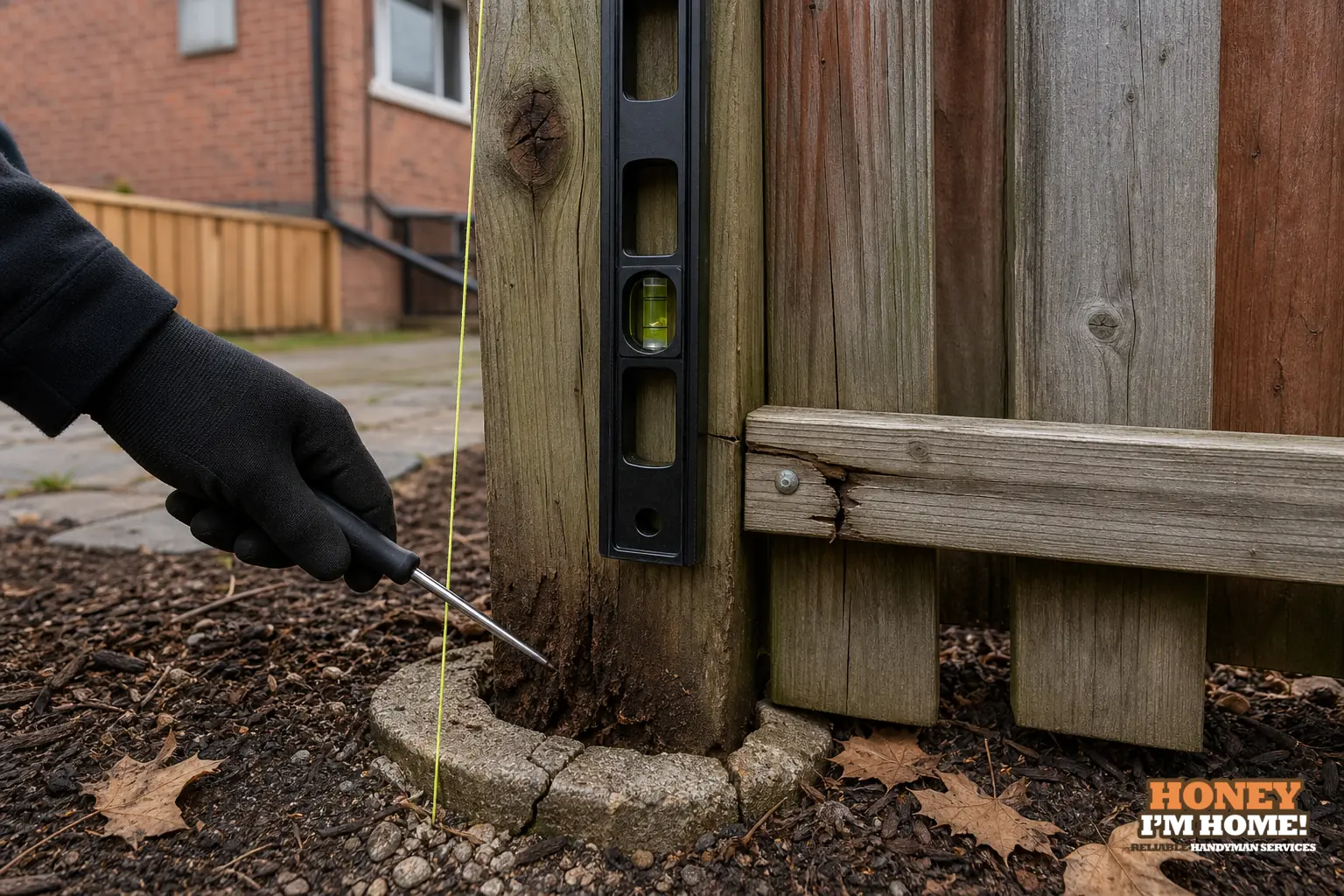
Grey colour, peeling stain and surface checking are normal signs of outdoor exposure. What concerns me more is wood that has become soft at a connection, a post that has lost useful material near grade, or fasteners that no longer have solid wood to hold.
That distinction matters because replacing visually old boards is very different from rebuilding a support point. If a rail is sound and one board has failed, that is a repair conversation. If the rail itself can no longer hold new material reliably, the scope has to move back to the part that carries the fence.
I use the same logic with previous patchwork. Repairs are not automatically bad. A good older repair can still be doing its job. I become cautious when there are several generations of patches attached to parts that are now moving together.
New wood beside old wood will look new
This sounds obvious, but it is worth discussing before a localized repair. New cedar or pressure-treated material will not look like a weathered fence on the day it is installed. Even if the dimensions are right, the colour and surface can stand out until the material ages or the finishing plan is addressed.
I do not think that visual difference is a reason to replace a sound fence unnecessarily. It is simply something homeowners should expect. If appearance is especially important, we can talk about how much of the visible section needs attention so the repair looks intentional rather than accidental.
One outdoor project can involve several kinds of repair
A verified Google review on my site describes a front porch and storm-door project where deck boards were replaced, reinforcement was added where needed, the porch was painted, the storm door was installed and the area was cleaned up. The reviewer wrote, "The quality of his craftsmanship is outstanding." I include that here because outdoor work often behaves exactly like that: the visible request leads to a few connected details that need to be solved in the right order.
A fence can be similar. What begins as a dragging gate may involve one moving post. A loose panel may trace back to a rail connection. The scope should follow the actual failure rather than the first symptom the homeowner noticed.
What I want to see before an estimate
- A wide photo of the full fence run from each accessible side.
- Close photos of the damaged boards, rails, posts or gate hardware.
- A photo showing where the fence meets the house, garage or another fence.
- Any section that moves when lightly pushed.
- Areas where vegetation, storage or a structure limits access.
- Previous repairs that appear to be failing again.
Those images help me understand whether the problem is isolated before I arrive. They do not replace seeing the fence, but they make the estimate conversation more useful.
I replace only when the remaining fence stops being a good foundation
I am not interested in calling every old fence a replacement job. If the majority of the support is still reliable, targeted repair can be the sensible way to extend its service. When several posts, rails and connections are failing together, the calculation changes because there is less dependable material left to attach the repair to.
If you have a gate, fence section, porch or another outdoor repair in the West End, see my Decks, Fences & Outdoor Projects service or send me photos and project details for an estimate.
Frequently asked questions
Does one leaning post mean the whole fence has to be replaced?
No. If the movement is isolated and the surrounding rails, boards and other posts remain sound, I first look at whether that section can be repaired without rebuilding the entire run.
Why does my gate drag when the gate panel looks fine?
The hinge post, hinges, frame or connections may have moved. I check those support points before treating the bottom edge of the gate as the main problem.
Can a repaired section match an older weathered fence?
The dimensions and workmanship can match cleanly, but new wood usually has a visibly different colour and surface at first. That difference can be considered in the finishing plan.