
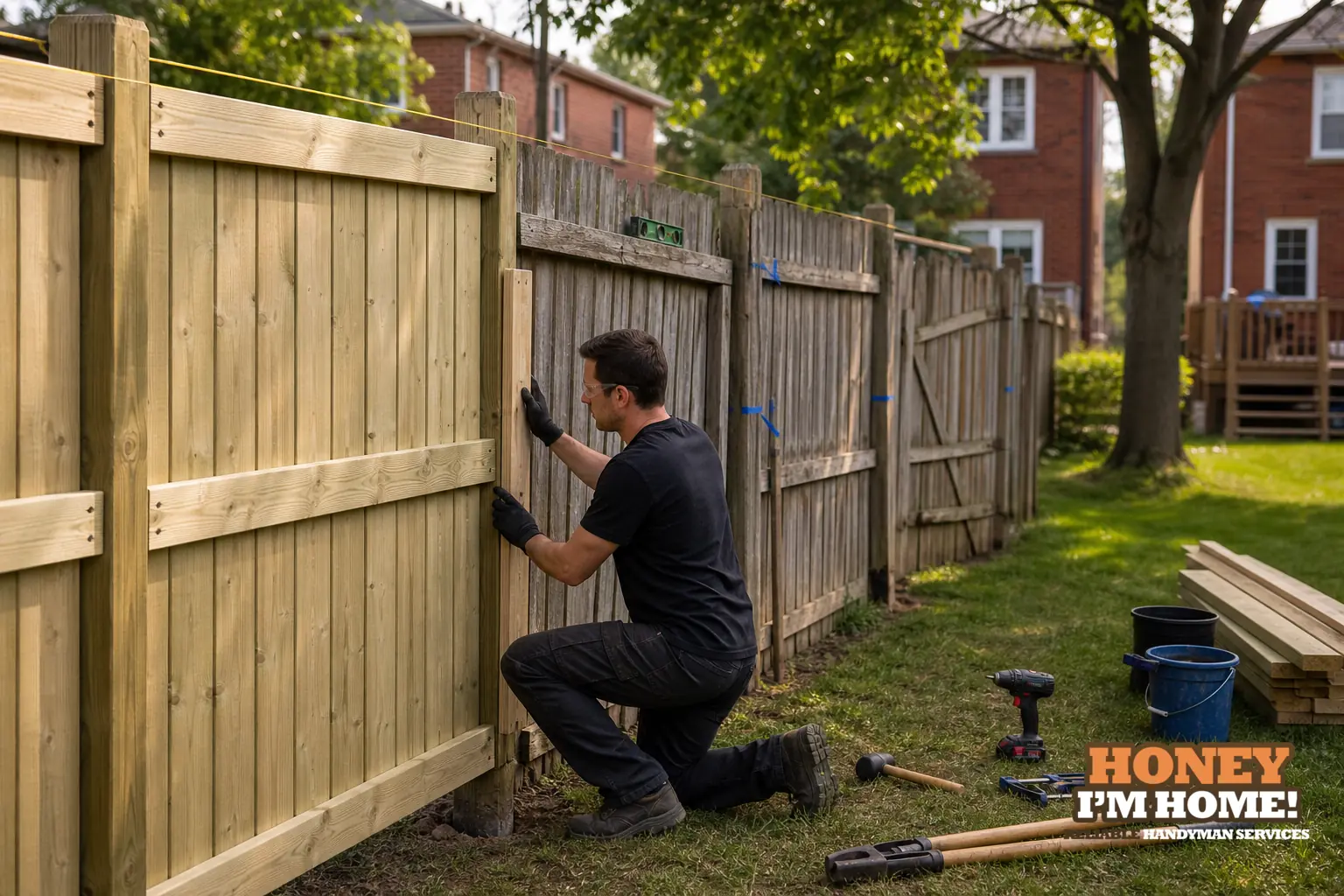
I usually repair a single panel when the posts and rails are still solid and decay is local; I recommend replacing a longer run when posts show ground-level rot, several adjacent sections are patched or sagging, or the visual irregularity matters. My on-site check tells me which approach gives structural reliability and a finish the owner will accept.
Quick decision rules I follow on the property
When I stand in your yard I reduce the decision to three visible facts: are the posts sound where they enter the ground; do the rails sit firmly and transfer load between posts; and is the decay limited to a single panel or spread along multiple sections. If the skeleton—the posts and rails—is solid, swapping one panel is usually the least invasive, most practical option. If the skeleton shows multiple weak points, a longer replacement gives you a uniform, dependable result.
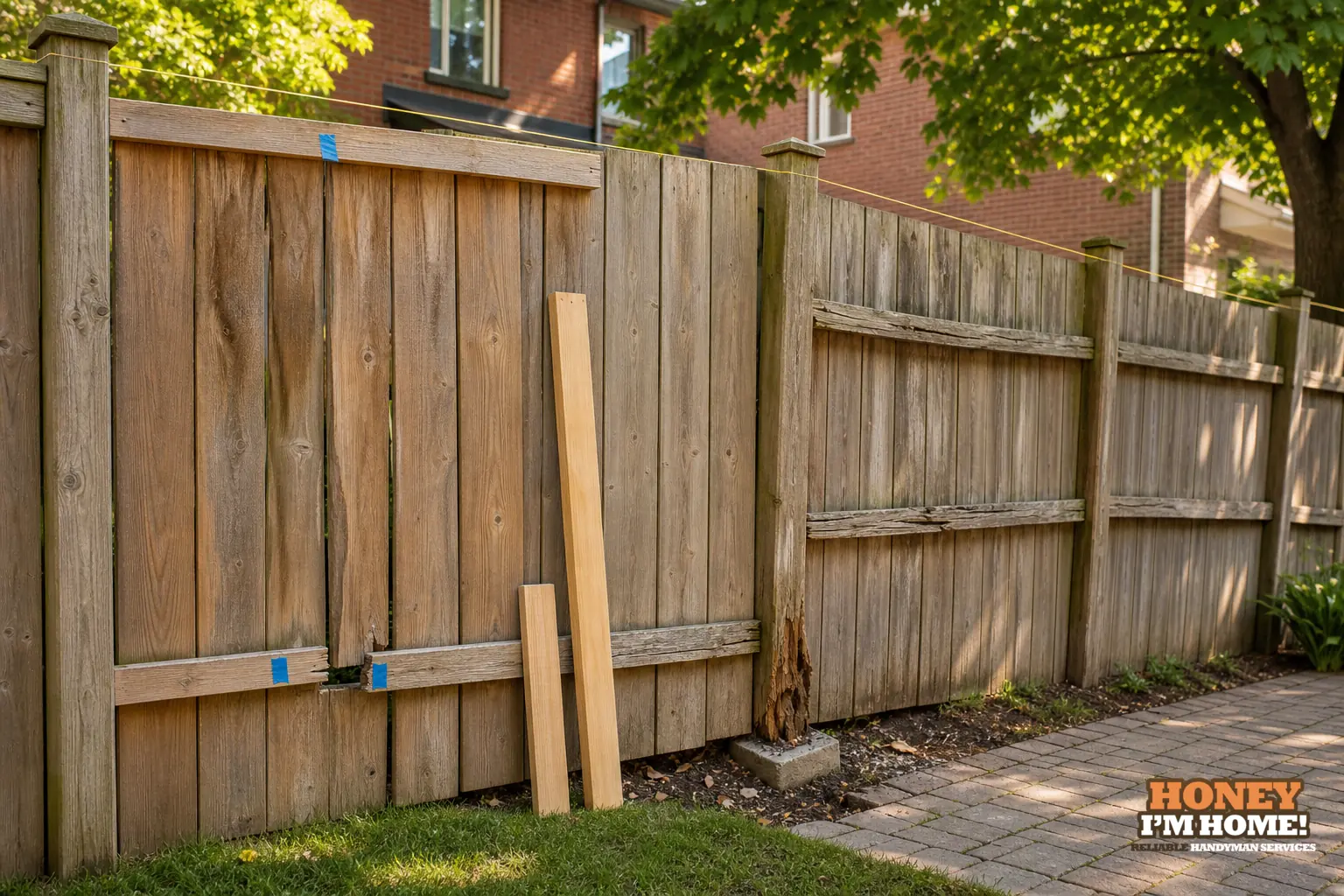
What I inspect and why it matters
My inspection is hands-on and focused. I don’t assume photos tell the whole story, so I press, pry and look for telltale signs at the connections that fail first.
- Post base and footing condition: I check for softness, cracked tops and movement at the post base or footing where rot typically starts.
- Rail seating and fasteners: I look to see if rails are still well seated in the post notches or brackets and whether nails or screws have withdrawn or fractured.
- Board ends and ground contact: Board rot usually shows at ends or where boards touch soil or hold moisture.
- Line straightness and loads: I check for sag, leaning or loads from gates, decks and heavy climbing plants that can overload one section.
- Material and profile matches: I note whether original boards or trim have a profile to preserve and whether new boards will match visually.
- Drainage and grade: Water pooling or poor drainage at the fence line accelerates decay and often points to wider work being the smarter choice.
When I recommend repairing a single section
I choose a single-section repair when the damage is local and the rest of the run shows clear soundness: posts are plumb, rails are intact and adjacent boards are attached tightly. That keeps disruption low—fewer post holes, less root disturbance to mature planting—and it keeps original material when that material is still useful. In those cases I match board profile and fastener type so the repair weathers in a similar way to the rest of the run.
For painted fences I clean and prepare the repair area, prime where needed and feather the finish so the repaired panel blends more easily. For natural wood runs I match species where practical, or choose a compatible timber that will patina in a like way.
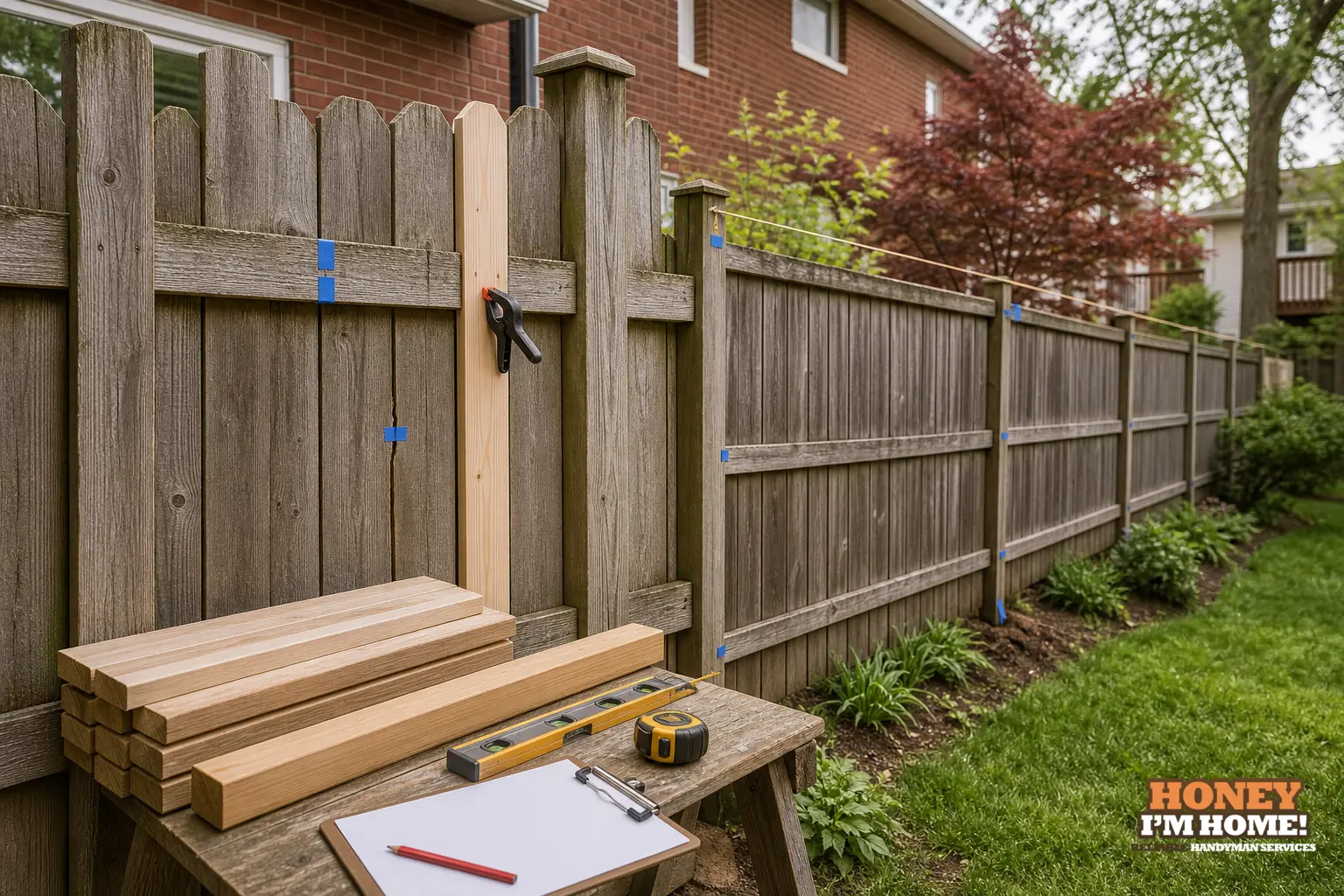
When I advise replacing a longer run
I recommend replacing a larger stretch when the problem is systemic rather than local. Typical triggers are multiple adjacent patched sections, soft post bases at several posts, repeated sagging, or a run that already has mixed heights and board profiles from past piecemeal fixes. Replacing the longer run removes recurrent weak links, restores uniform strength and achieves a consistent visual line.
Replacing a longer run also lets me address root causes: correct grade or drainage at the base, re-seat posts on better footings, and set fasteners and hardware to reduce future movement. The goal is to stop the cycle of repairing the same spots and deliver a line that performs and looks consistent.
Matching materials and preserving original character
Older houses often have board and trim profiles that don’t match modern stock. I measure the existing profiles and transitions, and I plan repairs so new pieces fit the visible line. If original boards are sound, I preserve them rather than replacing them for appearance alone. When the owner wants a seamless look across a longer run, replacing more of the line lets me install consistent material and spacing that’s otherwise hard to achieve with isolated patches.
How the local housing character changes my approach
In Runnymede I see many early-20th-century detached houses with Edwardian and Arts and Crafts influences; the City’s profile reported most dwellings there were constructed before 1960. That pattern matters for a fence decision because many yards keep original trim and woodwork. I won’t assume modern standard dimensions will hide at the line—I measure existing profiles and transitions and plan repairs that respect useful original material when it still serves the yard’s look. Where a fence ties into older porch trim or historic details, I preserve the visible character and match profiles rather than forcing modern stock that looks out of place.
Practical trade-offs I always discuss
Clients often choose between lower short-term disruption and longer-term uniformity. A single-section repair is quick and less invasive, which is ideal if the rest of the run is structurally sound and you want to keep mature planting intact. But if the run is patchy or the posts are compromised, repeated panel repairs are a string of temporary fixes. I’ll lay out what I plan to keep, what I recommend replacing and why, so you can weigh visual outcome, disruption and future maintenance.
A portfolio piece that shows my approach
A custom cedar double driveway gate in my portfolio shows the joinery and material choices I bring to gates and fence runs. That example illustrates the careful joinery, consistent wood choice and finish attention I use when I repair or renew a run. You can view the project example on our site in the portfolio gallery: see the gate.
How I work when you ask for an on-site look
I prefer an in-person inspection because posts and rail connections are easier to judge in the field. If you contact me through /contactruss/ I’ll walk the run with you, point out weak links and show the specific things I’d preserve or replace. If you want context on the types of projects I handle, there’s more under the parent service area at /services/decks-fences-and-outdoor-projects/.
What customers say
My work aims for tidy, honest craftsmanship. As one Google reviewer put it, "The quality of his craftsmanship is outstanding." See the review and the site examples if you’d like to judge finish and detail for yourself.
Common trade details I discuss on site
When we stand at the fence line I cover specific fixes I might do: repair a single board and re-seat its fasteners, replace a failing rail and tie it into existing sound posts, or—if replacing a longer run—rebuild posts and set them to better footings. I explain how I’ll protect adjacent planting, where I’ll match profiles and how I’ll finish and fasten the new work so it performs. I avoid overpromising on materials and timelines until I’ve seen the site and discussed your priorities.
How long will a single-section repair hold up?
Longevity depends on the condition of the posts, drainage at the base, and the quality of the materials and fasteners used; after an on-site look I’ll outline what to expect and how to extend the result’s useful life.
Can you match an older board profile?
I measure the existing profile and spacing, and I select replacement boards that match the visible lines whenever preserving the original look matters to the homeowner.
Do you do both small repairs and full-run replacements?
I handle both: I’ll recommend the approach that gives you a structurally sound run and a finish you’re happy with, then carry out work to that agreed scope.