
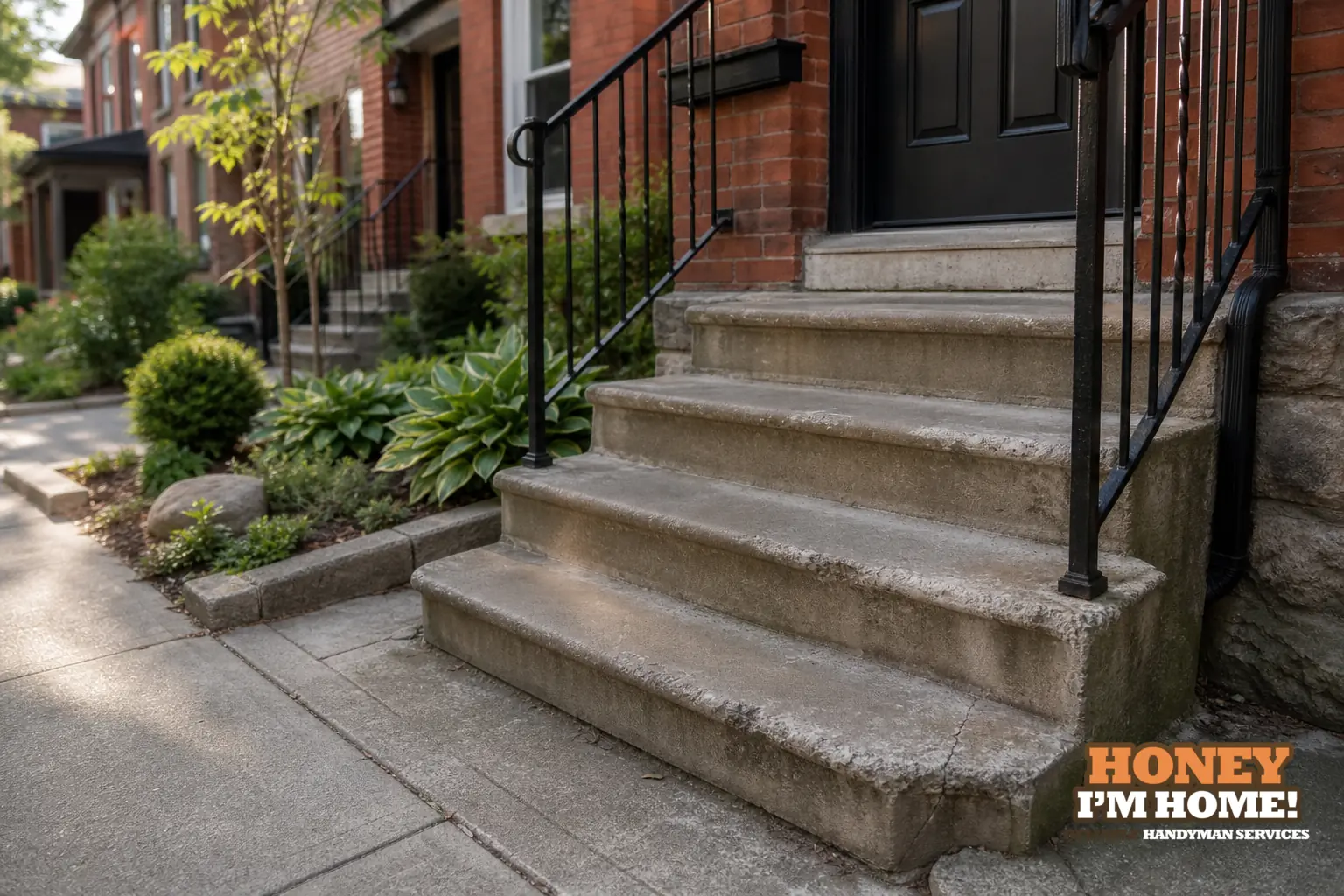
Worn porch steps usually reveal whether the problem is cosmetic, material failure, or connection movement. If the damage is limited to finish loss or a single tread nosing, a localised repair can stop the hazard and keep original material. If wear shows soft wood, crumbling concrete or loosened connections across multiple treads, expect a broader intervention and contact me to review options and next steps.
Reading the obvious signs: where wear shows up and why it matters
I start every call by asking you to describe where the wear shows up and by looking at photos. Centre-worn treads and polished paths point to long-term abrasion and finish loss. Nosing breakdown—where the leading edge of the tread has rounded or broken—usually tells me the step is getting direct impact and water is infiltrating that edge. Paint that flakes in large sheets or dark staining beneath the finish is a moisture clue: water’s been working under the surface for a while.
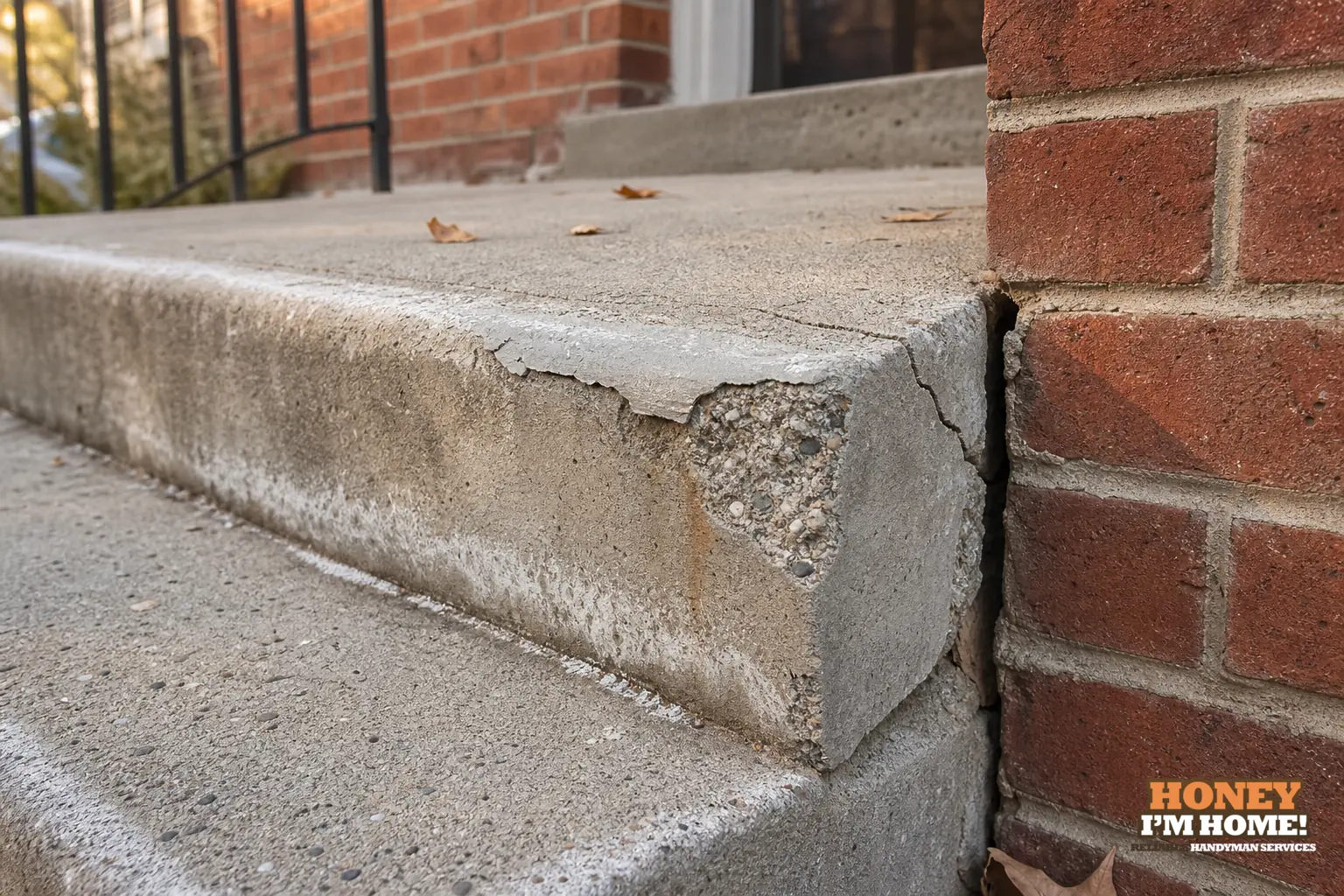
For concrete steps, I watch for two patterns: clean hairline cracking that stays mapped and localized spalling where the surface skin flakes away. The latter suggests freeze-thaw or repeated water entry at the surface rather than only a cosmetic issue. On timber stairs, pressed or soft spots underfoot are the clearest sign the material has started to lose strength.
Surface wear versus deeper material failure
Surface wear is what you can see and often what you can fix in place: worn paint, scuffed finish, or a rubbed tread surface. For those I remove loose finish, stabilise the substrate and match or rebuild the nosing so the walking plane is safe. Because the structural parts remain intact, these are true localised repairs.
Material failure looks different on inspection. In wood it’s soft patches, shredded grain around fasteners or rot where the wood crushes when probed. In concrete it’s powdery surfaces, exposed aggregate under the top skin, or spalling that deepens with each winter. Those conditions are evidence the element itself has degraded and patching the finish will only delay inevitable failure unless the degraded portion is removed and replaced.
Movement and connections: what a localised repair can’t always hide
When treads wobble, steps squeak or handrails pull away from their posts, the problem often lives at the connections. I test handrail anchors and pull at the tread-to-stringer junction because those fastenings tell the truth about how the stair still performs. Tightening a failing fastener or replacing one tread will improve safety if the connection points are sound.
If the stringer itself has softened where it meets the house, or if several treads show the same play, a localised fix is a temporary fix. In that situation I explain what’s required to restore reliable connections so you’re not back on the porch in a year. My trade rule: fix the attachment first, tidy the walking surface second.
How I inspect on-site and decide whether to localise the repair
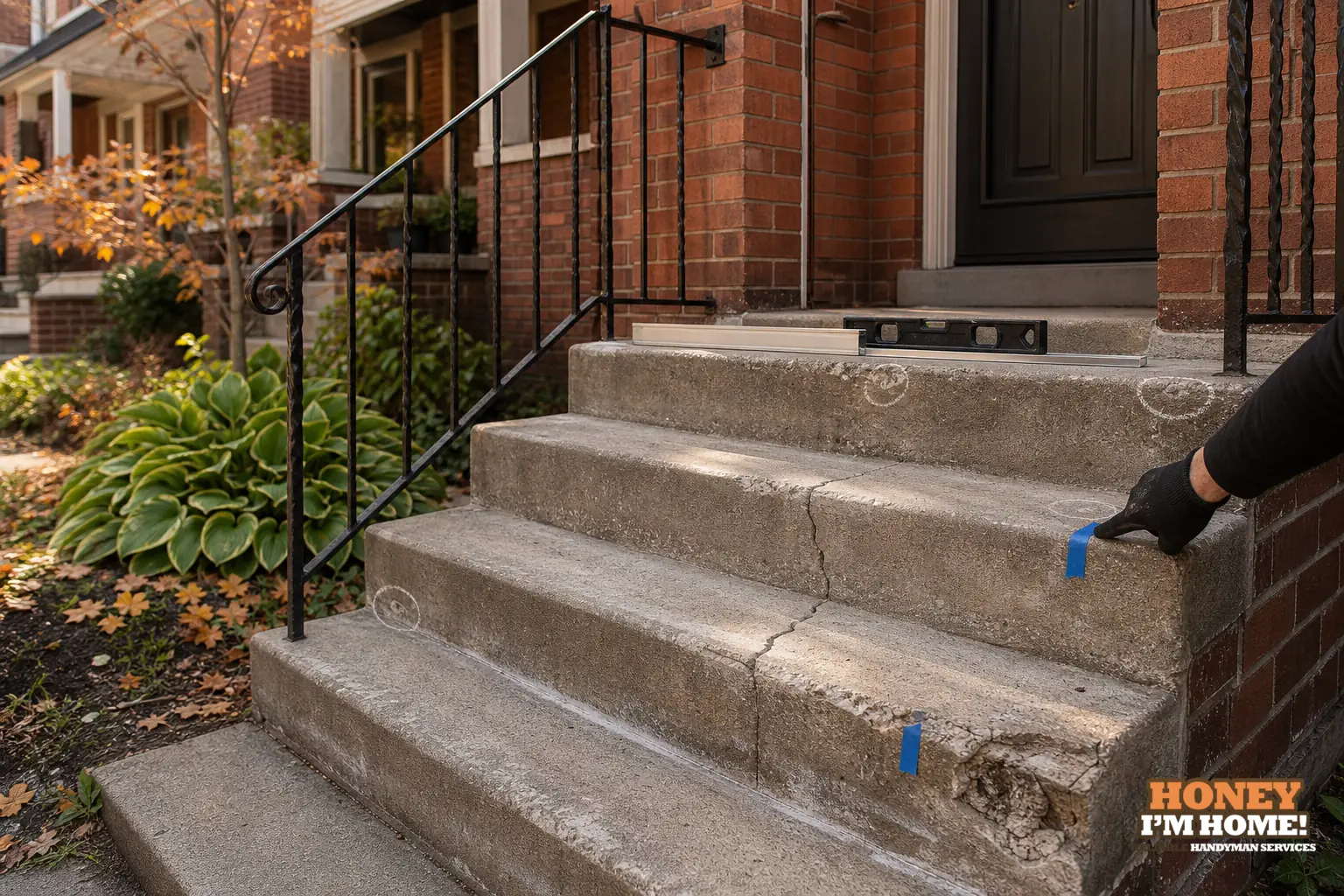
My inspection routine is hands-on and conservative. I probe suspect areas with a screwdriver or awl, remove a small patch of finish where needed, and trace how water moves around the entry. I check how gutters and flashings route water away, and I test any suspect fasteners. If only one tread or a section of finish fails and the substrate and connections pass those tests, I plan a localised repair that keeps original materials intact.
Before I hand over recommendations I confirm three things: the substrate is continuous and sound, the fastenings hold when tested, and the observed wear isn’t just the tip of a water path. When those boxes are ticked, a targeted repair—replacing a rotten tread, rebuilding a nosing or patching spalled concrete—usually stops the immediate hazard without unnecessary replacement.
Choosing repair materials and finishes with older houses in mind
Matching materials matters on older houses because stock modern profiles don’t always fit the original look or behaviour. I measure existing nosings and trim, check grain and species where timber remains, and match finish build-up so the patch weathers alongside the original. For painted elements I use a prep and primer sequence that respects how the original layers were applied so adhesion and water shedding are restored.
Water control at edges is a big part of any localised repair. A careful repair rebuilds weather-tight junctions at the nosing and restores a clear path for runoff. If the original material is usable, I keep it; if it’s compromised, I replace the portion that’s lost its structural or weather protection role.
How the housing character in Runnymede changes my choices
In Runnymede many houses are early-20th-century detached homes with Edwardian and Arts and Crafts influences, and the City reported a high share of dwellings built before 1960. That matters to how I approach a localised repair. These entries often have original porch profiles and non-standard step dimensions, so I measure existing profiles and transitions rather than assume modern stock will fit.
When original wood and trim remain serviceable, I preserve it because it’s part of the house’s character. If later renovations obscured how the threshold meets the entry, I look behind the trim to confirm the connections before cutting into treads. That prevents surprises and let me keep repairs local when that is the right choice for the house.
What I will repair locally and when I recommend replacement
Common localised repairs include replacing a single rotten tread, rebuilding a worn nosing, tightening or replacing bad fasteners, repairing a small area of concrete spall and re-pointing isolated mortar joints on masonry risers. Those keep the majority of the stair assembly and original materials intact while restoring safe use.
I recommend replacement when material failure or connection loss affects multiple adjoining elements: when several treads are soft, the stringer shows widespread degradation, or anchorage points are failing across the assembly. Replacing one piece beside failing members shouldn’t be done because it creates inconsistent behaviour and invites repeat work.
Preparing for my inspection: what to note and what I’ll bring
Before I arrive, walk the steps and note any soft spots, where paint flakes away, and whether water collects at the base. Photos from above and from the side are helpful—they show nosing condition and tread crown clearly. When I come I’ll probe suspect areas, remove small sections of finish if needed, and explain whether a localised repair will be durable or if a larger plan is safer.
If you want to set up an on-site review, contact me and I’ll schedule a time to inspect and outline options. If you prefer to read more about the kinds of porch and entry repairs I do, see the porch and entry services I offer at /services/front-porches-steps-and-entry-repairs/.
How soon should I worry about a small soft spot on a wooden tread?
A soft spot is a clear early warning sign. I probe to see if the softness is just surface decay or extends into the substrate; if the soft area collapses under light pressure the rot has progressed and needs repair. Next steps are a targeted inspection to determine whether the tread can be replaced locally or if surrounding elements show similar deterioration and require a broader plan.
Can a single spalled concrete step be patched reliably?
Yes, a single spalled area can often be patched reliably if the cause is limited and the remaining concrete is sound. I first check for recurring water paths or exposed reinforcement; if those aren’t present I can remove the loose material, treat the surface and apply a compatible patch. If the spall is evidence of deeper moisture or repeated freeze-thaw, we should consider replacing the affected element instead of just patching.
What tells you a localized repair will be durable versus temporary?
A durable localised repair starts with a sound substrate and secure connections. I test fasteners, probe for hidden moisture and confirm that wear isn’t following a broader water path. If the damage is confined to surface layers or a single component and the attachments are solid, a local repair will hold. If connections or the substrate are compromised across multiple elements, the repair will likely be temporary without addressing those root causes.
If you’d like me to take a look in person, please contact me and I’ll arrange an on-site review and clear, practical recommendations.