
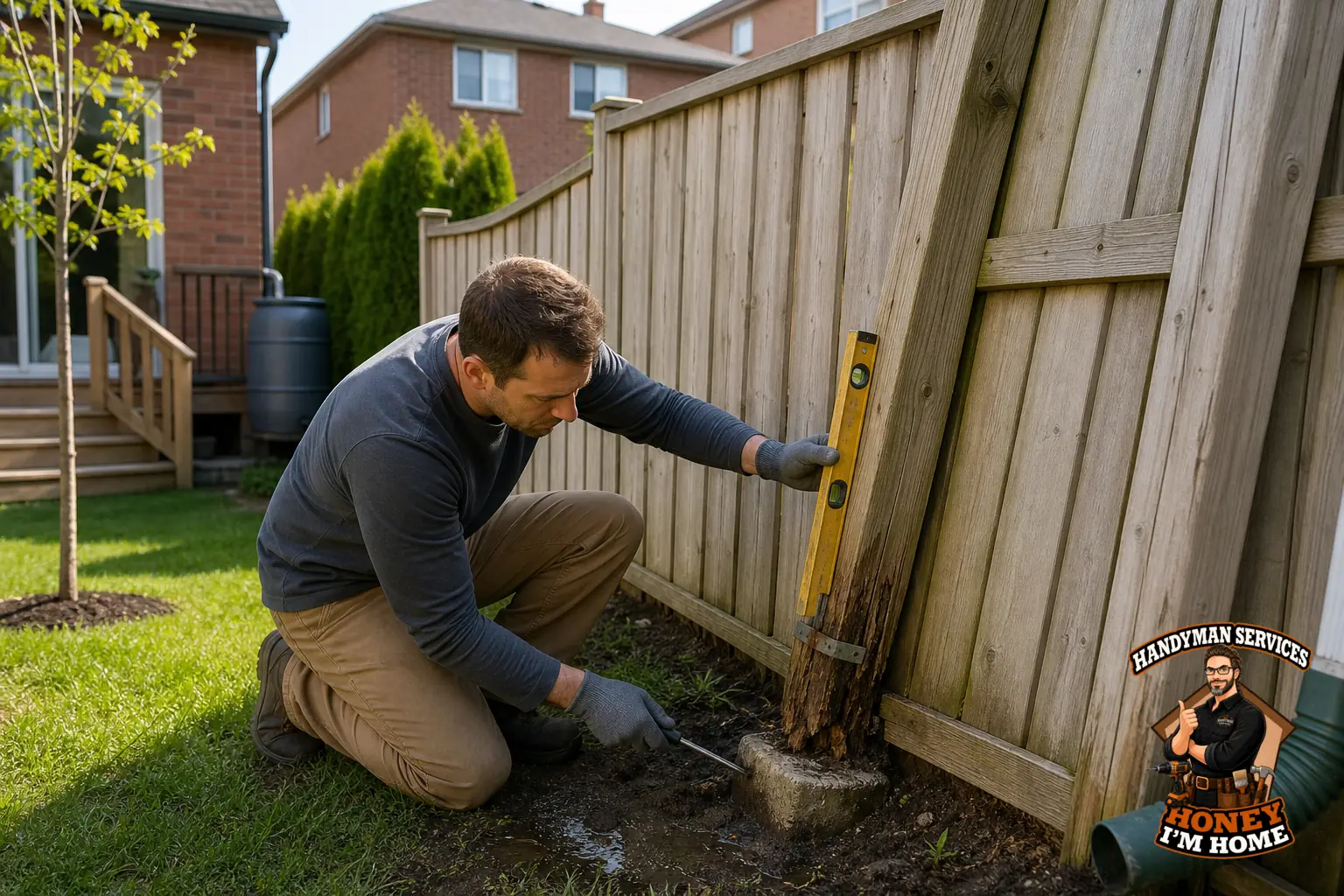
Most fences lean because the post anchorage fails: rot at the ground line, loose fasteners or ties, soil movement from freeze–thaw and poor drainage, or an impact that shifts a post. Before repair, I check post condition, attachment hardware, rail integrity, ground drainage and neighbouring grade so I know whether I can stabilise what’s there or need full post replacement.
Common causes I find on site
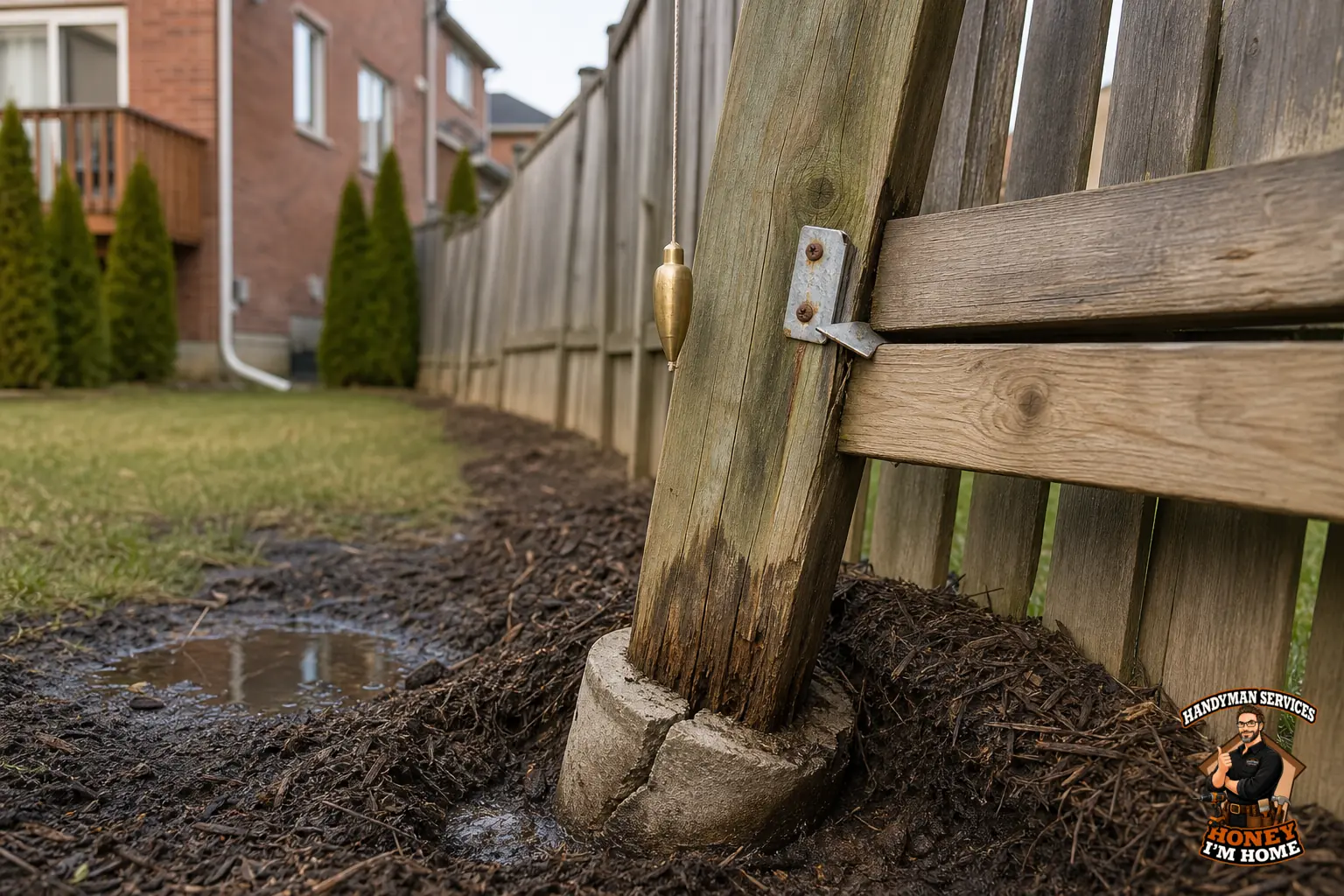
When I walk a leaning fence I look for a handful of familiar failure patterns. Rot where the post meets the soil is the most common — wood hidden by soil or mulch soaks up moisture and loses strength. Fasteners and metal brackets corrode or pull out over years. Repeated freeze and thaw or tree roots will heave the soil and shift posts. Impact damage from a lawnmower, vehicle or fallen limb can bend a post or split the rail, and gradual soil wash or a raised grade on one neighbour’s side can reveal that a once-plumb fence now tilts.
Those causes often act together: a slightly loose post lets the pickets wobble, water pools against the bottom rail, the wood softens, and after a season of weather the whole line leans. My job at the first visit is separating what’s cosmetic from what actually holds the fence up.
What I inspect before I plan a repair
I follow a predictable checklist so I don’t miss the small things that become big problems later. I document each point with photos and notes so you have a clear scope when we discuss next steps.
- Post condition at ground line: I probe the wood and look for soft, crumbly fibres and splits that show rot.
- Post alignment and movement: I lean on posts by hand and watch for side-to-side play at the base.
- Fasteners and connectors: I inspect nails, screws, and brackets for corrosion, bending, or pull-through.
- Rails and pickets: I check whether rails are split or detached from posts rather than assuming the post is the only problem.
- Soil and drainage: I note pooling water, saturated soil, recent landscaping that raised grade, and nearby downspouts or irrigation that can keep posts wet.
- Vegetation and roots: I look for roots pushing posts, vines holding panels in odd positions, or shrubs that transfer load during storms.
- Impact signs: fresh bark, paint scuffs, or crushed gravel can point to an impact event that loosened an otherwise sound post.
- Neighbour boundary and visibility: I check both sides of the line for grade differences and whether a retaining wall or slope is affecting posts.
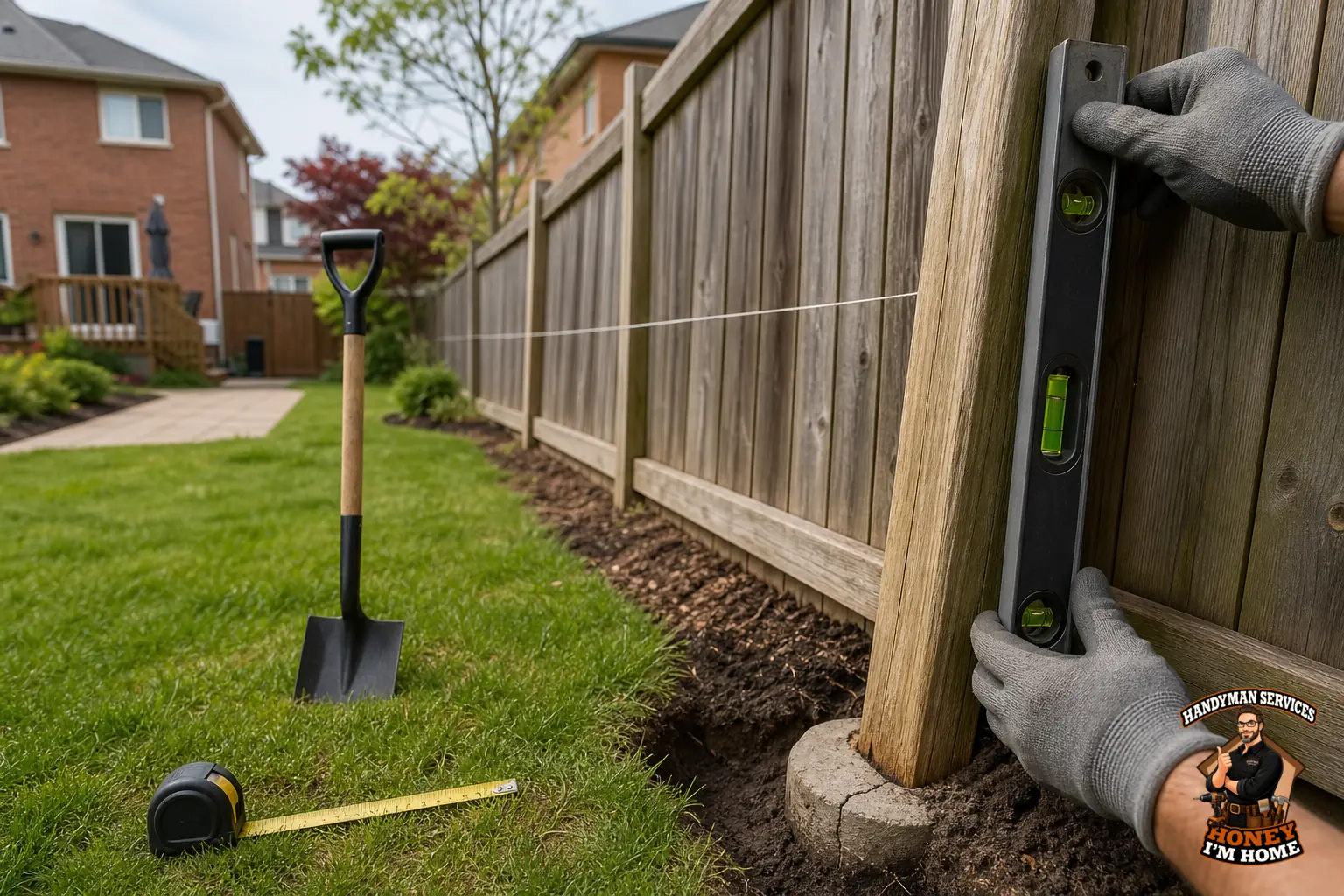
I normally run these checks with a few basic tools: a long screwdriver or awl for probing, a spirit level, a camera for photos, a pry bar for checking connections, and a tape to note offsets. Those tools tell me whether I’m dealing with surface repair or something that needs post work.
How housing character in The Kingsway affects repair choices
The Kingsway neighbourhood has a lot of older, single-detached houses with Arts and Crafts, Tudor Revival and Georgian influences. City research also highlights traditional materials like stone, brick and crafted wood on significant houses, and the 2016 profile showed many dwellings were built before 1960. That matters when I plan a repair because profile-matching and visual sensitivity often matter to homeowners here.
On a property with period woodwork or masonry close to the fence line I pay extra attention to retaining original carpentry where it still exists. If the fence meets a stone wall or a classic brick porch, I avoid replacement details that would fight the character of the house. Rather than defaulting to a modern stock picket, I document original post caps, rail profiles and picket spacing so any new work integrates with the existing finish — but I only apply that sensitivity to the actual material present on the property, not across every house in the neighbourhood.
What my inspection photos and notes include
When I finish an inspection I’ll hand you or email a short packet with these items so we can decide the right repair path together:
- Photos of each problematic post at ground level and about chest height.
- Close-ups of rot, fastener pull-out or cracked rails.
- Notes on drainage or grade issues that may have caused the movement.
- Recommendations: stabilise, local repair, or replace individual posts and rails.
That documentation helps avoid surprises at the work stage and makes the discussion with a neighbour simpler when needed.
A concise project vignette from my portfolio
I keep examples short and factual: a completed Honey, I am home outdoor project shown on the site is a custom cedar double driveway gate. That job reminded me how important material choice and installation method are to long-term performance — cedar sheds water well, and a properly hung gate avoids twisting that can mimic a leaning fence problem. You can see examples in the portfolio when we talk about style and detail choices.
When a homeowner can do simple checks safely
There’s useful work you can do without specialized skills: clear soil and mulch away from the base so you can see the post, remove vines and vegetation that hold moisture against wood, and photograph the problem after a rainfall to show how water behaves. Use a screwdriver to gently probe suspect wood near the ground line; firm wood offers resistance, while rotten wood gives easily. If you feel uncertain or see wide splits, heavy corrosion or a post leaning badly, that’s the time to call for a professional assessment.
When I recommend stabilising versus replacing
My decision is evidence-based from the inspection. If the post is mostly sound and fasteners have worked loose, stabilising and reattaching rails can restore the line. If the post shows established rot at the base or the post core is soft, stabilising is a short-term fix and I’ll recommend targeted post replacement. I won’t suggest replacement to chase a cosmetic flaw; instead I prioritise the elements that keep the fence standing.
Practical next steps and how I work
If you want me to look at your fence I’ll set a brief visit to run the checklist, take photographs and explain the options. I don’t push replacement unless the inspection supports it. If you want inspiration for styles or larger projects, I’ll point you to our service family page for finishes and project examples at Decks, Fences & Outdoor Projects. Ready to arrange a visit? Use /contactruss/ and I’ll set a time to come by.
As one Google review put it, “The quality of his craftsmanship is outstanding.” See the review proof on our site at /#awards if you want an independent read on workmanship.
Can I straighten a leaning fence myself?
If the post is only slightly loose you can try re-seating fasteners and clearing soil, but avoid heavy digging or jacking without professional help.
How do I tell if a post is rotten?
Soft, spongy wood at the ground line or a screwdriver that pushes in easily are clear signs of rot needing further assessment.
What if the ground around my fence stays wet?
Persistent saturation accelerates wood failure; improving drainage and removing soil against posts are sensible first steps to slow further damage.