
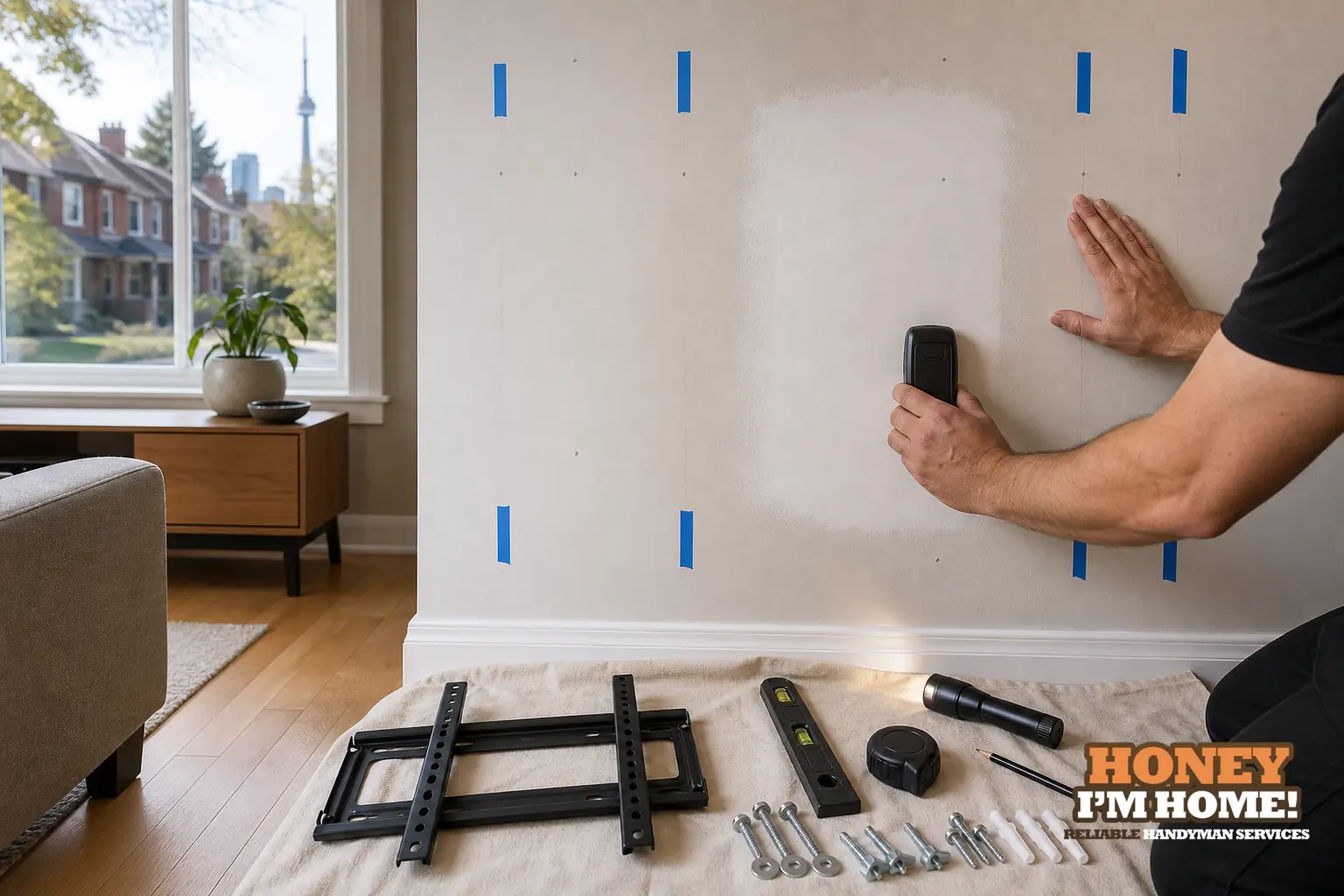
If a wall has been repaired previously, don’t assume the repair will hold a heavy load. I start by inspecting the repair finish and probing behind it, confirm what material is behind the patch, locate any solid backing, and test the patch for movement. If the repair used a different substrate or loose filler, I plan reinforcement or use appropriate anchors rather than relying on the visible surface alone.
How I assess a repaired wall before I drill
I look for three simple clues when I first walk into a home: how the patch meets the surrounding surface, whether the paint or texture matches, and whether there’s any visible cracking or soft areas. A neat skim coat that blends to the wall edge is a good sign, but it doesn’t tell me what’s behind the finish. I use a light tap, a handheld probe, and a reliable stud sensor to learn whether the repair sits over original framing, a blocking repair, or simply a hollow plug of filler.
When the patch sounds hollow or the sensor reading is ambiguous, I avoid relying on screws into the repaired area. I also look along adjoining trim or baseboards for signs of movement or settling; these details tell me whether a previous repair was cosmetic or structural, and that changes the fixings I choose.
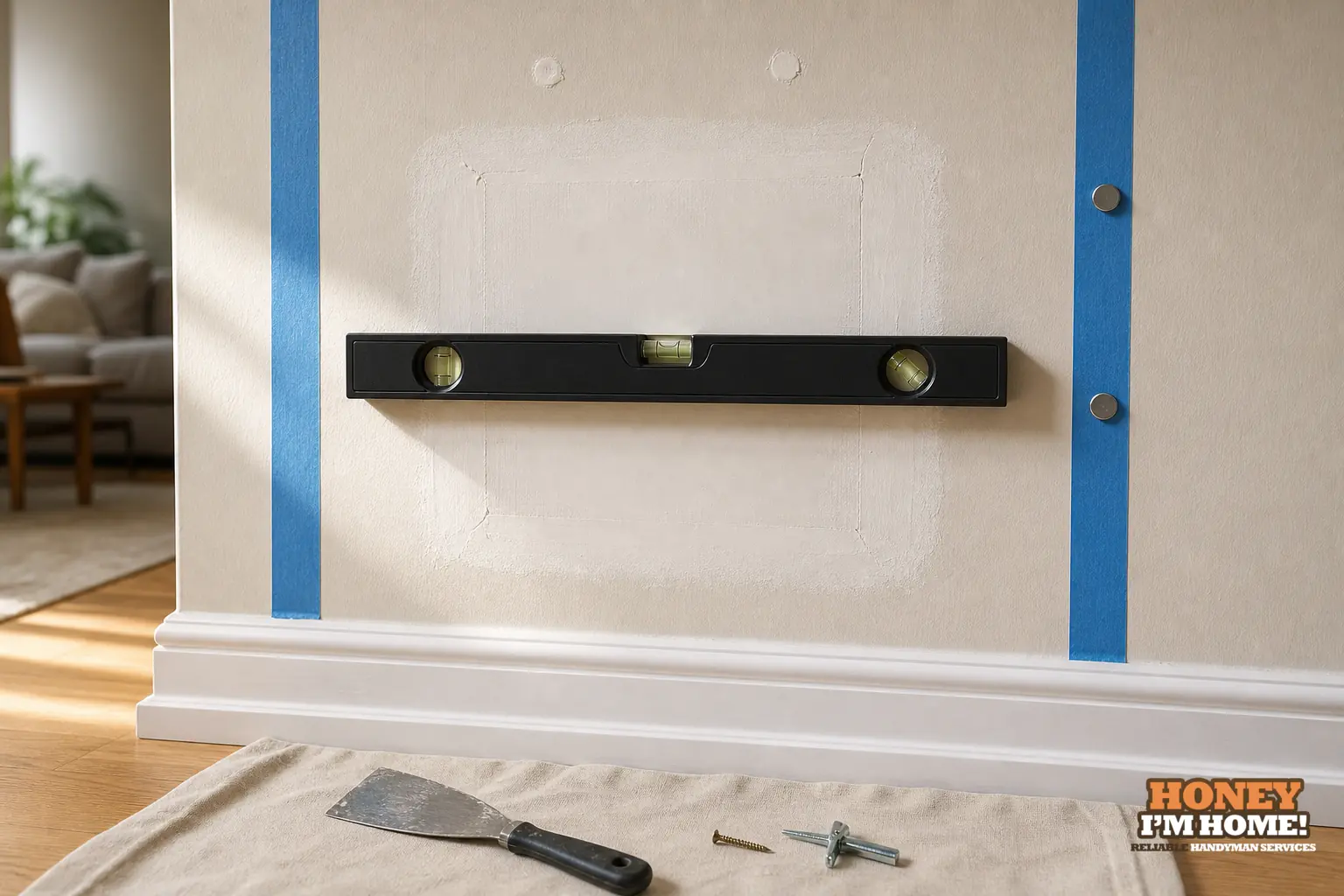
Common repair types I see and what they mean for mounting
Plaster patches: in older homes a repaired area is often plaster skimmed over lath. Plaster can be brittle where it’s been reworked, so I check the edge of the repair for delamination. If the patch is bonded to original plaster and solid at the edges, I can fasten into surrounding sound plaster or locate backing behind the lath. If the patch is only cosmetic, I treat it like a hollow zone.
Drywall repairs: these range from a clean drywall patch with tape and compound to a rough patch filled with fast-setting filler. A taped and sanded drywall repair that’s flush with the wall is usually acceptable for light loads, but for heavier TV mounts or shelving I look for evidence of backing or reinforcement behind the patch.
Other fills: some repairs are done with patching compounds or expanding foam. These may look okay but provide no holding power. When I find a filler that compresses or crumbles under light pressure, I plan to avoid anchoring into it and instead find solid framing or install a blocking solution.
Tools and checks I bring to every inspection
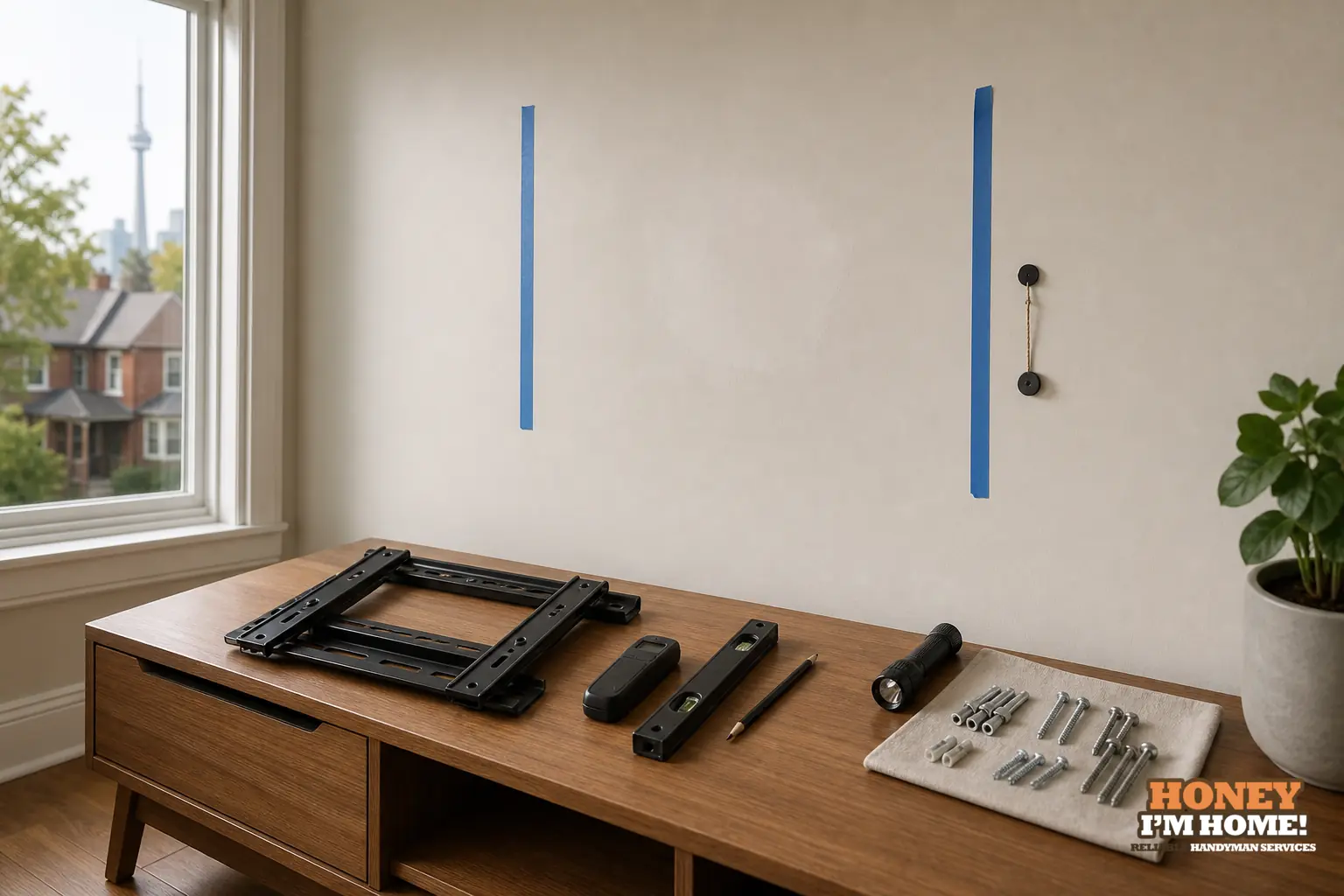
I carry a small set of simple tools that tell me more than the eye does: a stud sensor that detects both metal and wood, a lightweight probe for edge testing, a claw hammer for a quick sound test, and a mirror and flashlight for looking around trim or inside closets. I also bring a small selection of anchors and screw types so I can test a non-critical spot and decide the best approach on site.
When possible, I remove a small inconspicuous section of the patch to confirm what’s behind it. If that’s not desirable, I will rely on a combination of sensor readings and edge probing to form a plan. I never depend solely on surface cosmetic quality; a smooth finish can mask hollow workmanship.
How the local housing character affects my approach
I work a lot in High Park and nearby areas where the housing mix is mixed. The City’s 2016 High Park-Swansea profile reported that 55 per cent of dwellings were built before 1960, and the area contains both older houses and a substantial apartment and condominium stock, so access, wall construction and finish details can differ sharply between nearby projects. In an older detached house I expect to find original plaster, historic trim, and patchwork done over decades; in an apartment or newer renovation I expect drywall over modern framing or accessible service cavities.
Because of these differences, I tailor the approach to the actual wall assembly I find. On a plaster wall in an older house I take care around original trims and plaster keys; in condos I pay special attention to whether patches are covering a chase or mounting point that’s not transferable to heavy loads. That on-the-spot determination is what changes my mounting method.
When I plan the mounting solution
Once I know what’s behind the repair I pick one of three clear paths: locate solid framing and fasten into it; install purpose-made reinforcement behind the finish (blocking or a backing plate); or, if the repaired area is not suitable for the intended load, shift the mount location to sound wall. For TV mounts and heavy shelving I prefer to engage verified solid backing rather than rely on the surface patch alone.
If reinforcement is the right call, I explain options in plain language, including whether accessing the cavity is possible from inside a closet or by removing trim in a small area. I balance minimal disturbance to finishes with the need for a reliable attachment. If the homeowner prefers minimal visible work, I outline what performance trade-offs that choice entails.
Practical on-site decisions I make without drama
I communicate plainly when I’m on site: I’ll describe whether the repair looks cosmetic or structural, what my tests revealed, and the mounting options that will give reliable performance. That often means showing the homeowner the sensor readings or a probing result so the choice isn’t abstract. If the patch won’t accept a dependable anchor, I explain why a backing solution or a different location is the safer option.
My objective is to leave you with a secure mount and a tidy finish. If you want the full installation handled for you I cover our scope on the parent page at /services/tv-and-shelving-mounting/ and you can reach me directly through /contactruss/ to book an inspection.
One quick note from a customer
"This is a person whose number is worth saving." — Google review. See proof at our awards page.
How do I know if a repaired wall can safely hold a TV mount?
Look for solid backing, sound edges around the repair, and firm sensor readings; if any of those are missing, I recommend reinforcing or choosing a different location.
What if the repair is only cosmetic and I still need a shelf where it is?
If the repair is cosmetic I won't rely on the surface; I either fasten into nearby solid framing or add backing so the shelf stays secure.
Can you check my wall and give a recommendation?
I can inspect on site, show you what I find, and suggest the best mounting approach—book an inspection through /contactruss/.