
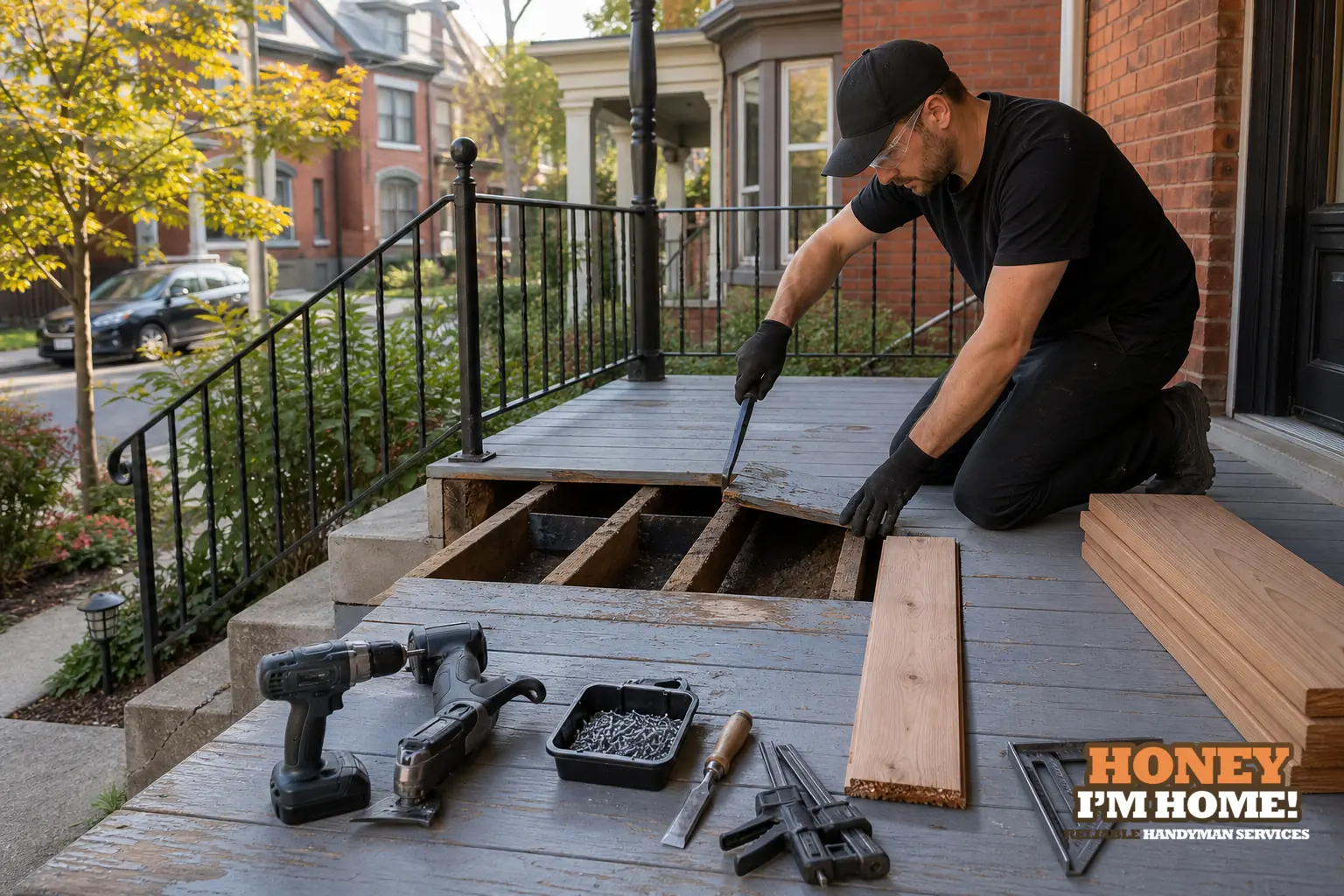
If a porch board has surface rot, loose fastenings, or a local split but the supporting framing and ends are still sound, I usually repair it by splicing, scarfing or sistering a new piece. If the board is crushed, puckered across its width, or the substrate is wet and unstable, replacement of that board and any damaged adjacent framing is the safer choice.
How I decide: a street-level inspection you can follow
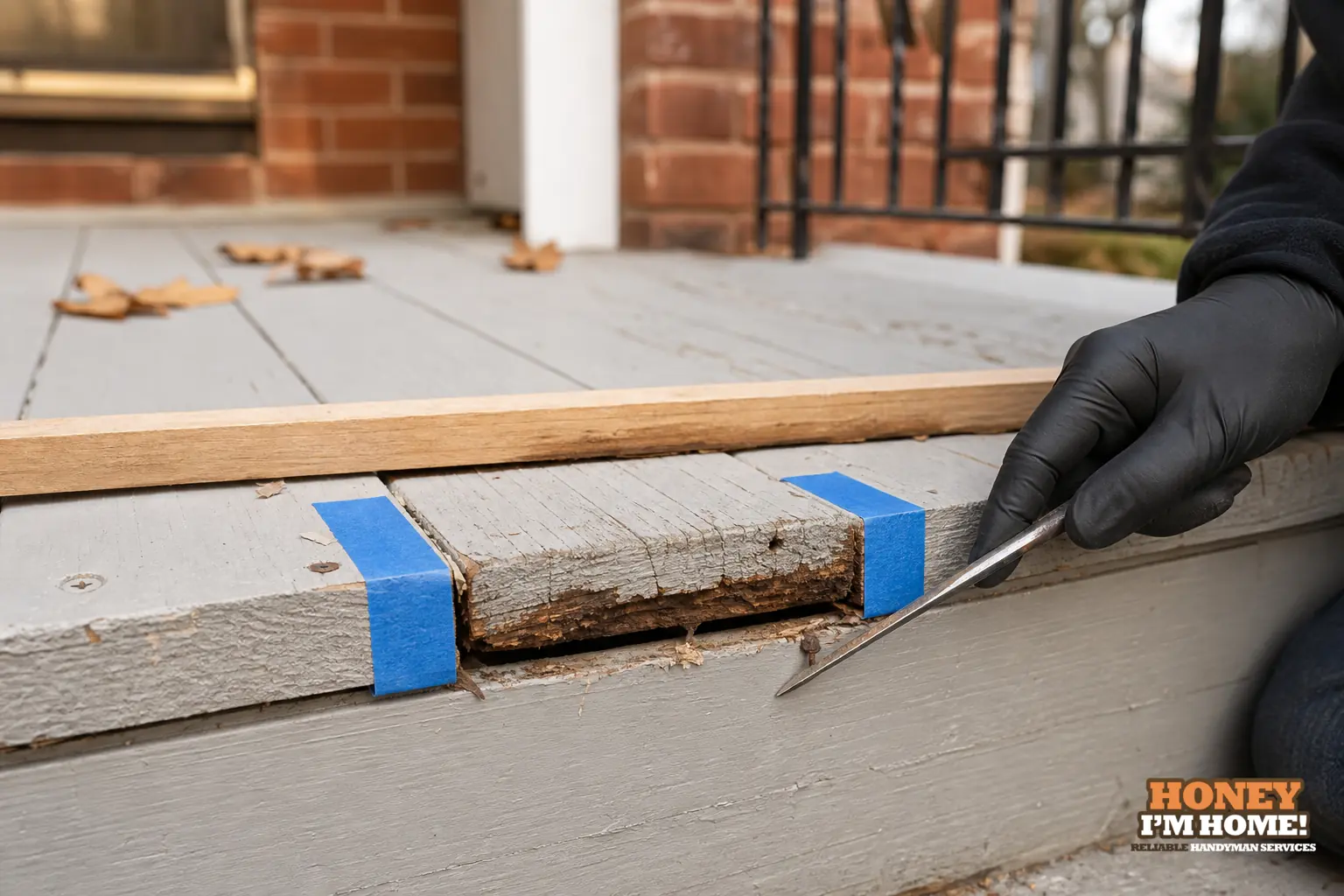
I start at eye level and work the board with my hand and a screwdriver. I look for soft spots underfoot, give at the edges, and any movement where the board meets the joist. A couple of practical signs tell me whether a local repair is realistic: the decay is limited to the top face or a single edge, fasteners pull through cleanly, or the joist connection is tight. If the rot runs under the board across the joist or the board is delaminated along most of its length, that suggests the problem has moved beyond a simple patch.
When I advise homeowners in this part of the city I also check how the boards meet thresholds and doors. When the porch connects to a crafted wood doorframe or has leaded glass nearby, I pay extra attention to how any replacement will meet those details so the new work doesn't look out of place.
Repair techniques I use on site
For a localized problem I prefer repairs that preserve as much original material as possible. Common field fixes I use include trimming out the damaged face and gluing in a hardwood or rot-resistant plug, installing a lengthwise splice where the joint sits over a solid joist, or sistering a new board up against the old and planing both to match the profile. I carry hardwood and softwood blanks and exterior-rated adhesives to make a tight, weather-resistant join on site.
When I repair, I also replace corroded screws and nails with stainless steel fasteners and dress the ends with an exterior sealant so water is less likely to wick back into the joint. I always prime and paint or stain the repair to match the adjacent boards; a new, unsealed patch will draw attention and fail sooner.
When I recommend replacing a board instead
Replacement is my go-to when the board is compromised across its width, the tongue or groove is damaged, or there is movement at the joist connection that indicates the fasteners no longer bite. I also replace when neighbouring boards are separating or cupping — that usually shows moisture has migrated and a single repair will be only a temporary fix. Replacement lets me inspect the joist ends, re-seat the fasteners, and ensure the board meets thresholds and trim cleanly.
On replacement jobs I match the species and profile as closely as I can. If the original was a historic profile or planed tongue-and-groove, I carry profile gauges and match the sightlines so the new board aligns with the existing rhythm of the porch surface.
Tying the decision to the character of the neighbourhood
The Kingsway has a lot of older houses with Arts and Crafts, Tudor Revival and Georgian influences; many retain crafted wood door and window frames and decorative finishes. City profiles note that a majority of homes here were built before 1960 and that single-detached houses dominate the area. For that reason, when I work on porches in this neighbourhood I look harder for original carpentry and decorative details. If the porch boards butt up against a bead moulding, a restored stair nosing, or a historic threshold, I treat the repair as a conservation task—matching profile, grain direction and finish—rather than a simple like-for-like swap. Not every house is heritage protected, but if the material looks original I preserve and match it rather than covering or replacing unnecessarily.
Practical steps I take when I’m on site
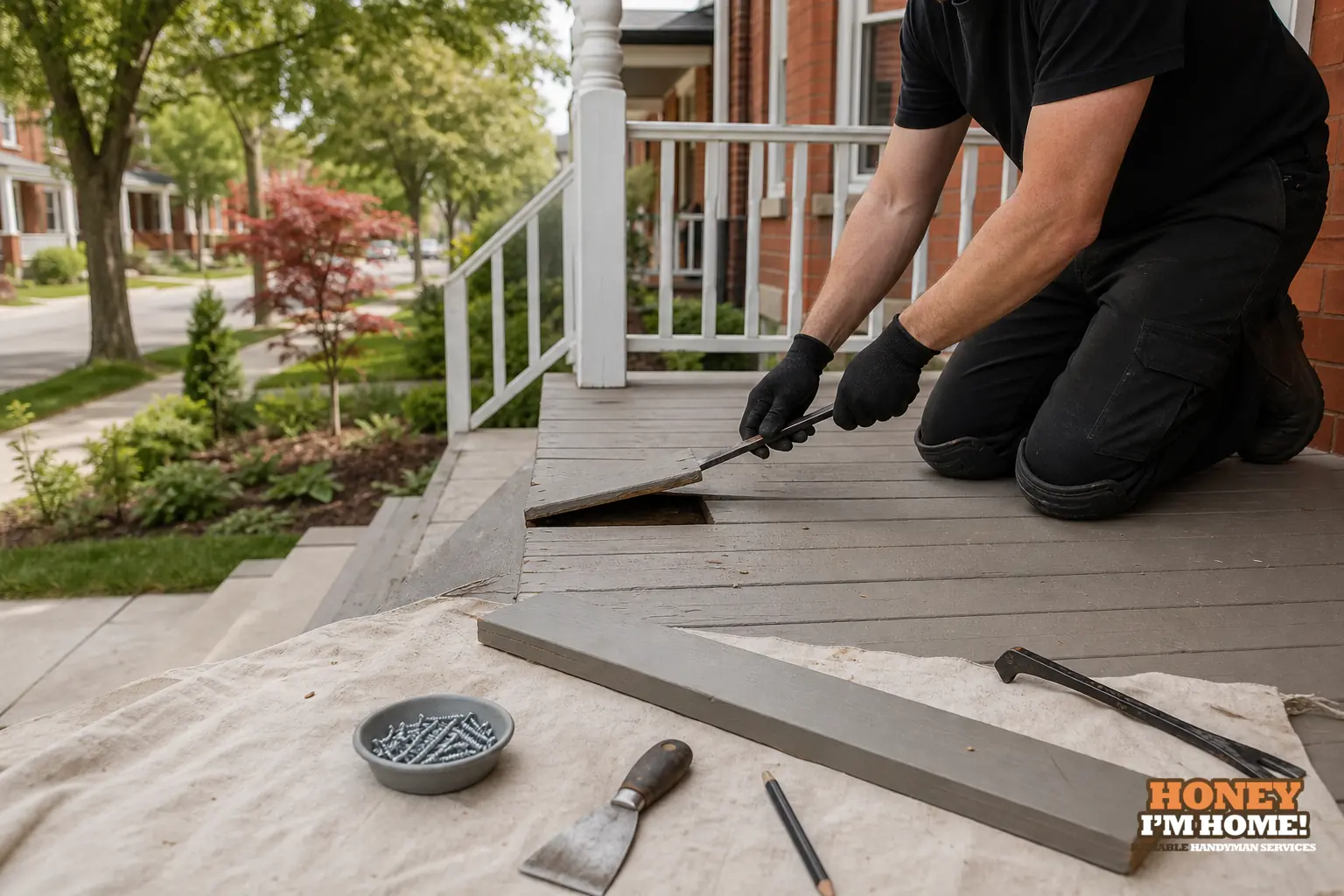
First, I lift an edge, probe the board faces and check the joists from underneath if access allows. I test the adjacent boards and the rim joist for tenderness. If the rim joist is wet or soft I note that and recommend a larger intervention; if it’s dry and solid I plan a local board replacement or splice. I also look up at the porch roofline and gutters for dripping and splash patterns—chronic water entry is the reason we see repeated failures in the same boards.
I always discuss visibility and finish with the homeowner before cutting a board. Some clients prefer a repair that’s nearly invisible; others accept a practical patch if the porch will be resurfaced later. I explain trade-offs plainly: a splice keeps more original wood but needs careful finishing, while a full replacement is clean but must be profiled to match surrounding boards.
Matching materials and finish
Matching species and profile matters where original trim is present. I carry samples and will plane and rabbet on site to line up the sightlines. If I can’t match the species exactly I at least match the grain direction and finish so the replaced board weathers compatibly. For exterior finishes I use a prime coat, followed by paint or stain compatible with what’s already on the porch; this helps hide small differences in wood tone and grain.
I avoid using obscure synthetic profiles where the porch has period detailing. Where the owner intends to preserve historic character, I recommend milled wood that can be maintained and refinished — it responds to repairs far more predictably than some composite mixes.
How small repairs fit into larger porch upkeep
Fixing a single board is an effective early intervention if the underlying structure is sound. It’s also an opportunity to correct drainage patterns, refasten loose perimeter trim, and treat the work area so the new board lasts. If multiple boards show similar wear or if finish failure is widespread, I recommend planning a coordinated surfacing project so the repair blends with a full recoat or refinish.
If you want an estimate after I inspect, I’ll give clear options: localized repair with preservation focus, targeted replacement with matched profile, or a plan that ties repairs into a larger porch refresh. You can request a visit through /contactruss/ and I’ll come inspect and outline what I see.
What I typically carry in my truck for these jobs
On local repairs I have blanks of common exterior woods, stainless fasteners, adhesives, sealants and profile tools. I bring a selection of paints and stains for matching on the spot. The goal is to finish the repair so it resists water entry and blends visually; I rarely leave a repair half-done, because exposed ends will take on moisture quickly in this climate.
When to call a pro and how I work with homeowners
If you detect soft spots, wide gaps between boards, or pop-through fasteners I recommend a professional assessment. I explain the choices plainly, show the affected framing and the condition under the board, and outline the hidden risks if repairs are deferred. For homeowners who want a conservation-minded solution I prioritise profile matching and minimal cutting; for those who prefer a straightforward replacement I focus on clean joins and durable fastenings.
If you want a detailed discussion about options, visit the parent service page at Front Porches, Steps & Entry Repairs or book an inspection via /contactruss/.
Can a single rotten porch board be repaired?
Yes, if the rot is restricted to one face or edge and the supporting joist and surrounding boards are sound. A repair can preserve original material and restore strength.
Will a local repair look different from the rest of the porch?
It can if not finished properly; I plane, profile and finish to match so the repair blends with the existing boards.
How long should I wait before getting a professional inspection?
Arrange an inspection as soon as you notice softness, movement, or water staining so the issue can be assessed and contained.