
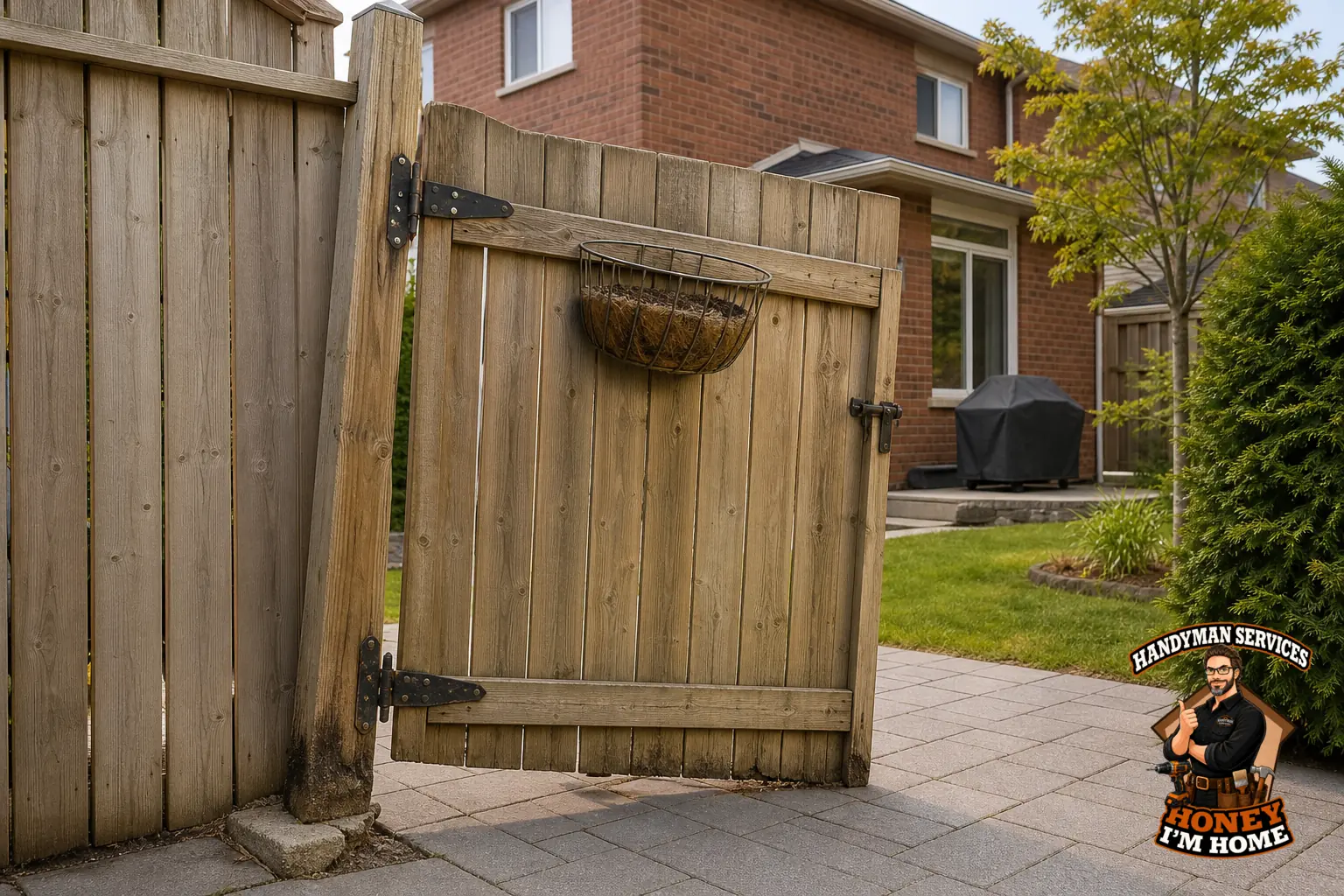
A gate sags when its support geometry shifts or the gate gains effective weight relative to its hinge line. I look first at the hinge line, the post where it meets the ground, fasteners and any swollen or failing boards. Those checks tell me whether the fix is a hardware refresh, a post stabilisation, or a partial frame rebuild that preserves sound original material.
Quick causes I check first
In the field I see a few repeating causes that let a gate tip, bind or fail to latch. Worn or loose hinge hardware often allows the gate to drop. Posts can move in their ground seat or rot at the buried end, changing the gate geometry. Boards and rails that have absorbed moisture or delaminated increase effective weight and twist the frame. Added items—planters, heavy latches, or extra cladding—can also shift balance away from the hinge line.
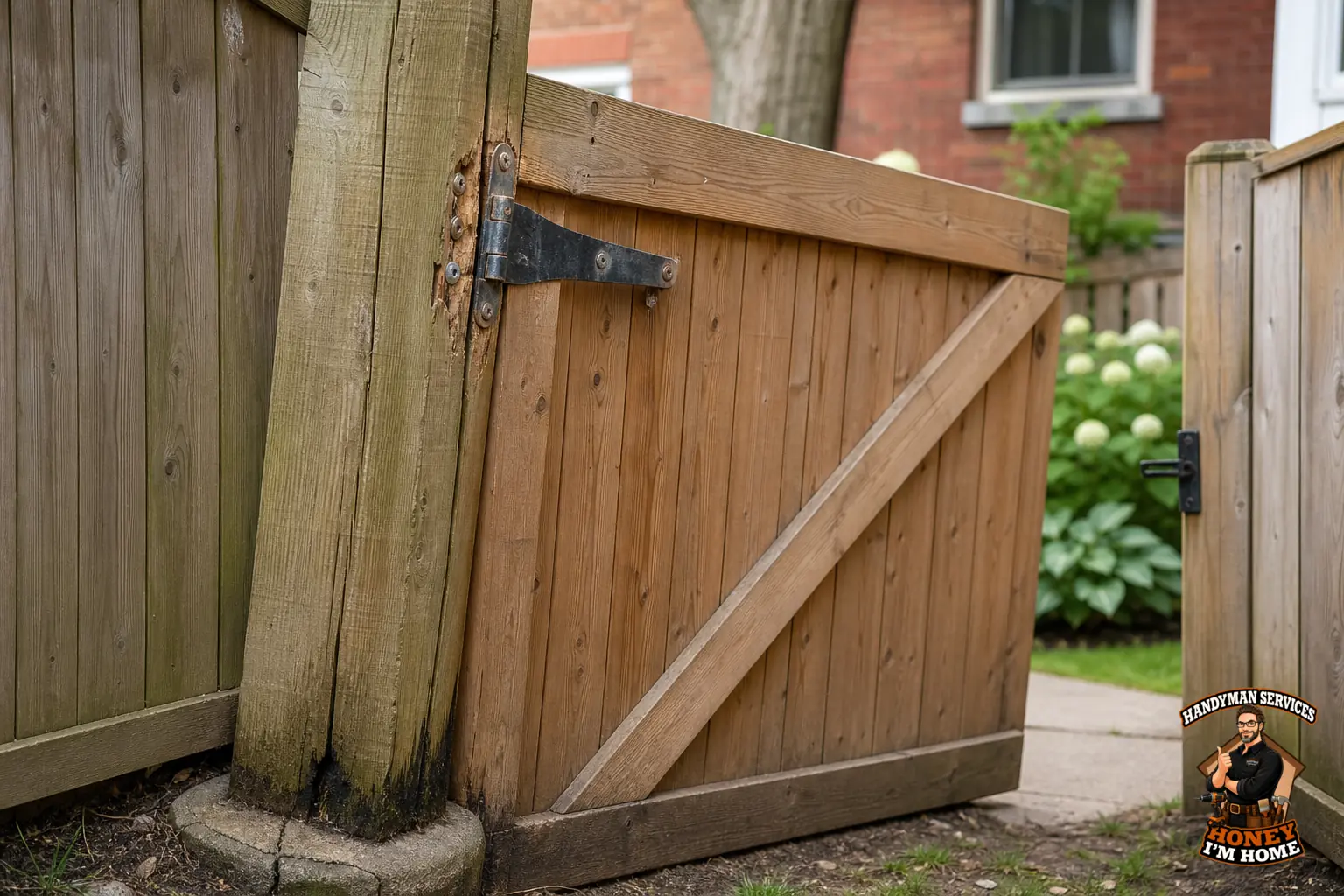
Diagnostic checklist I run on site
I use a steady routine so the primary failure doesn’t get masked by secondary damage. I do this openly with the homeowner so you can see what’s wrong and why.
- Open and close slowly while watching the hinge line for twist, wobble or binding.
- Look for elongated screw holes, missing fasteners or loose hinge leaves on both gate and post sides.
- Push the post near the base and again near the top to feel for movement that would drop the latch.
- Run a hand along rails and boards for soft or spongy timber that adds weight or allows the frame to deform.
- Check latch and strike alignment—misalignment usually points back to geometry rather than the latch itself.
- Note any added weight: flower boxes, mailbox mounts, extra panels or decorative cladding change the load on hinges.
Those steps separate straightforward fastener and hinge jobs from ones needing post work or partial rebuilding.
Tools and small fixes I commonly use
I bring stainless fasteners, through-bolts, replacement hinges and plates, shims and exterior-grade washers. For a hinge-related drop I’ll replace worn leaves, fit larger fasteners or add a hinge plate that spreads load into sound timber. If previous screw holes have elongated I through-bolt into solid stock when possible. For metal gates I replace corroded hinge plates; when the mounting surface has failed I’ll suggest a specialist if the repair requires welding or new metalwork.
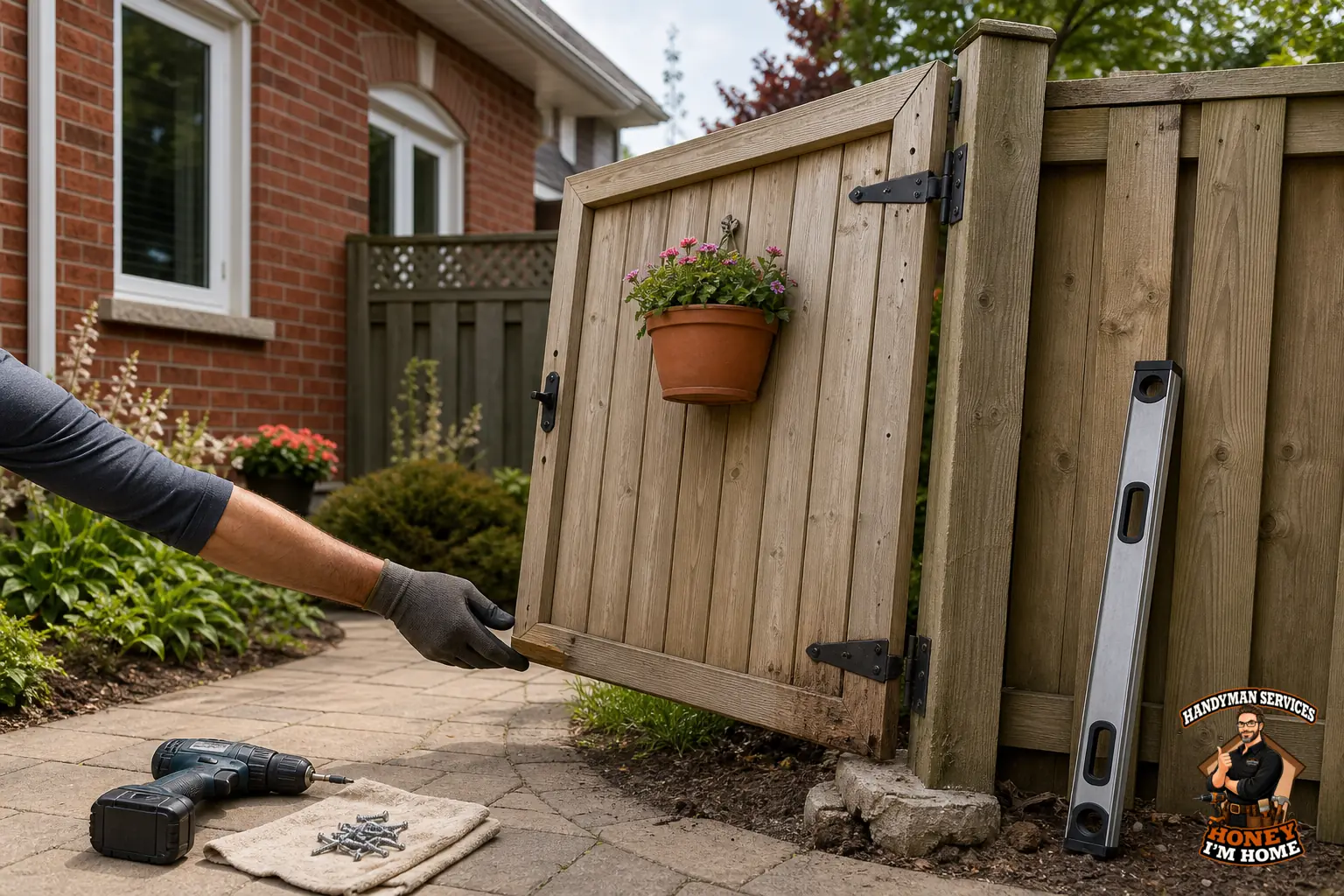
When the post is the real problem
Even new hinges won’t keep a gate true if the post moves. If the post shifts when I push it, or if the timber at the ground contact is soft, the gate will keep dropping. I stabilise loose posts with bracing and better connections between hinge and post. When buried timber has failed I remove the rotten portion and either splice in sound stock or re-seat the post; the choice depends on how much original material is still serviceable. I also check the joint between post and adjacent rails—split connections can change the repair approach.
How added weight and attachments change the repair path
A simple picket gate can start sagging faster after someone hangs a planter or adds a heavy latch. That extra load increases the stress on hinges and can open up fastener holes. If balance has shifted I consider removing the added weight, upgrading the hinge mounting, adding a third hinge or reinforcing the frame and rails so the gate closes square without changing its look.
Connecting repairs to Runnymede’s housing character
Runnymede-Bloor West Village has many early-20th-century detached houses with Edwardian and Arts and Crafts influences, and most dwellings in the area were built before 1960. On those older properties I take existing profiles and joinery into account rather than forcing modern stock to fit. That means measuring rail and picket profiles and preserving useful original timber where it remains sound so the repair respects the house’s character. Matching thicknesses and rail layouts keeps the gate looking right and reduces unnecessary joinery cuts.
Portfolio vignette (concise)
On my project pages I show a custom cedar double driveway gate that I completed for the site; that portfolio item is listed as a completed Honey, I am home outdoor project. It’s a clear example of heavier gate types and the joint and hinge proportion issues I work with—see the portfolio and wider services at Decks, Fences & Outdoor Projects for related work.
What I measure and what I don’t assume
I measure hinge locations, rail profiles and the depth and condition of the post at ground level before I recommend a repair. I don’t assume modern hinge heights or stock sizes will match an older gate, so I aim to reuse sound original parts when that keeps geometry and appearance intact. When lower rails show water damage I look at ground clearance and site drainage so the fix reduces the chance of the same failure recurring.
When a temporary fix makes sense
If you need the gate serviceable until a planned repair, an adjustable strap or external brace can hold the alignment and protect the latch. It’s a stop-gap: useful to prevent further damage, but not a replacement for stabilising posts or renewing critical fastenings.
How I help on a visit and next steps
On a visit I run the diagnostic checklist with you, show the primary failure and explain practical repair options: hinge hardware refresh, post stabilisation and bracing, partial rail or board replacement, or a frame rebuild that keeps sound original material. If you want a site inspection, please use Contact Russ so I can confirm what’s needed and follow up with a written plan if you want one.
One Google reviewer said, "The quality of his craftsmanship is outstanding." See that feedback and other proof on our awards page at /#awards.
How can I tell whether hinges or the post are at fault?
Watch the hinge line while opening and closing; if only the hinge area shows play the hardware is likely at fault, but if the entire post shifts the post is the problem.
Is there a useful temporary fix before a repair visit?
An adjustable strap or temporary external brace can hold alignment and protect the latch until a permanent repair is scheduled.
Will replacing hinges alone stop a sagging gate?
Replacing hinges can cure sag from worn hardware, but if the post is loose or the buried timber has failed hinges alone won’t stabilise the gate.