

Start by naming the one or two problems you need fixed and confirm which cabinet boxes, sink location and appliances must stay. I lock those decisions, order any long-lead items, protect the house, do the messy or access-dependent work first, then install countertops, backsplashes and final hardware so finishes arrive undamaged and fit to finished lines.
Name the problem and fix the scope
The sequence depends entirely on what you change and what stays. I make a short list with the homeowner: keep or replace cabinet boxes; keep or alter the countertop run; move the sink or stove; replace doors only. If cabinet boxes stay, I plan tasks that affect mounting, blocking and countertop edges before I fit trim or tile. If the layout changes, the job becomes larger and the order of trades changes accordingly.
I also ask about daily priorities: which functions must remain usable? If the sink or range needs to stay in service for part of the work, I group demo and rough work into short blocks so the homeowner has at least one working station most days.
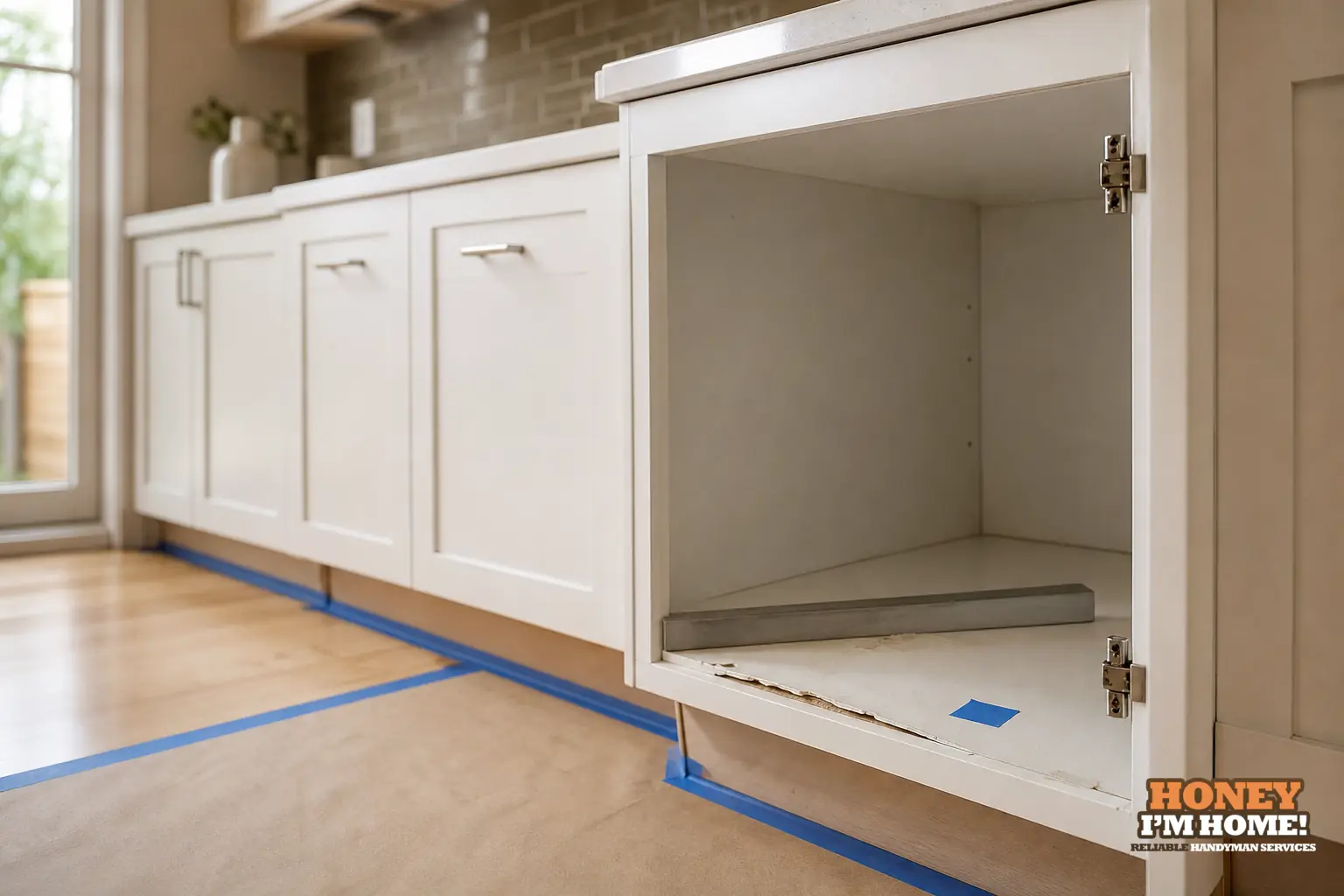
Blocks of work I use to build a sequence
I split small updates into clear blocks so one trade finishes before the next starts. That keeps trades from working over each other and reduces rework.
- Confirm scope and measurements: final decisions on what stays and what must be replaced.
- Order long-lead items: special doors, custom trim, unique tiles or unusual hardware.
- Protect the house and establish access routes for deliveries and trades.
- Contained demo: remove only what prevents the new pieces from fitting correctly.
- Rough work and access tasks: add blocking, check fastenings and repair substrate as needed while walls are open.
- Install fixed surfaces that set lines: countertops and fixed shelving first so edges are final.
- Fit backsplashes and finish tile after countertops so tiles scribe to finished edges.
- Final carpentry, caulking, paint touch-ups and hardware fitting as the last pass.
What I check on the first site visit
On site I inspect wall finishes behind cabinets, how cabinets are fastened and where blocking will be needed. Plaster over lath, original trim and older fastenings change the demo approach and the timing for finish carpentry. I also check delivery access and staging: if a slab or a large box has to be manoeuvred through stairways or a narrow corridor, that controls the day we schedule that install.
My notes become the sequence: which items I can install early, which need to wait until the counter is secured, and where I must protect finishes. That practical list prevents the common mistakes I see when people guess the order from a picture.
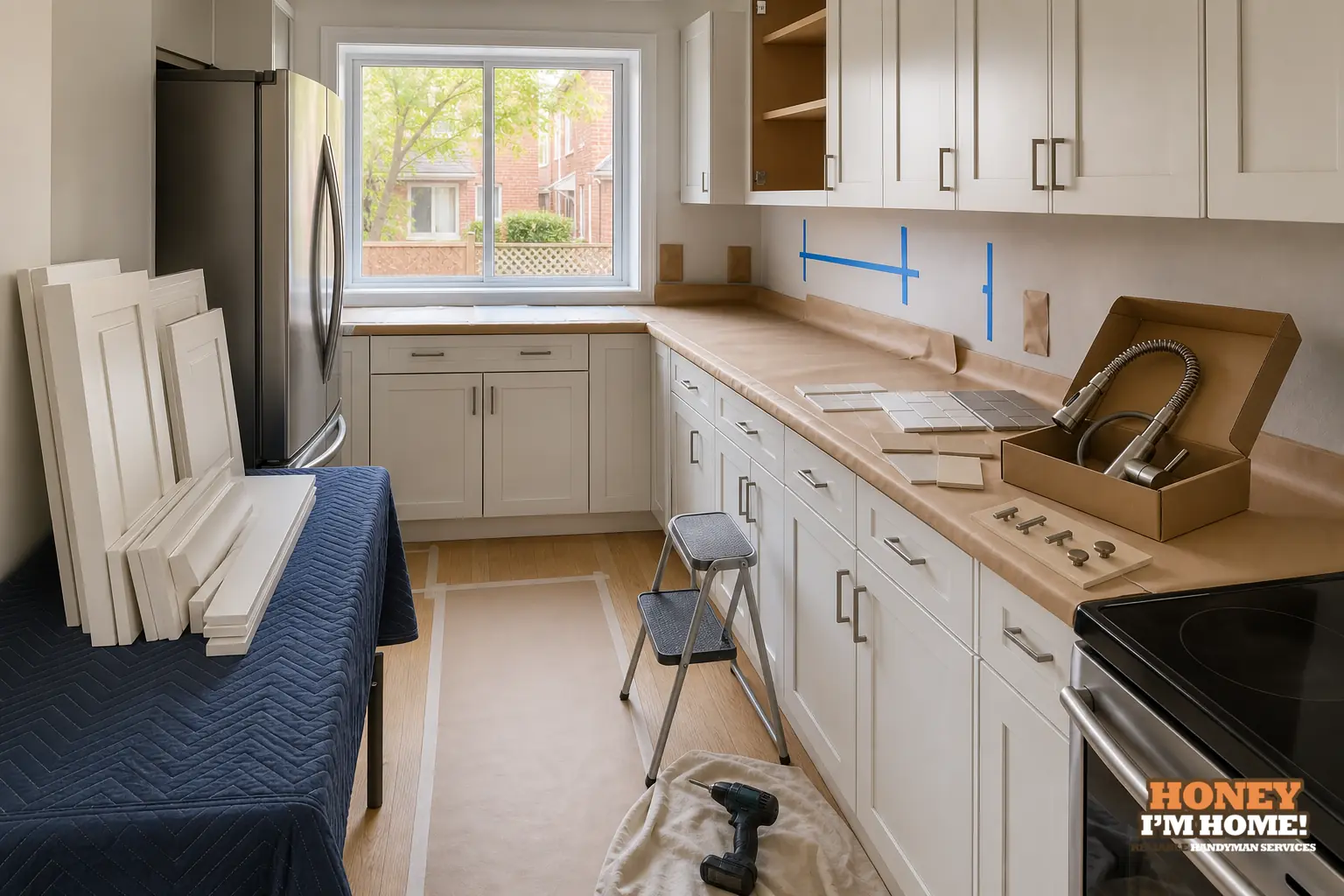
Protect finishes and keep final trades last
I leave final paint, caulking, grout and hardware to the end. Those items pick up dust and scuffs if installed while tile or countertop work is still happening. Installing mouldings and knobs after counters and tiles are in place lets me measure gaps and align pulls to the finished surfaces, not a temporary edge.
If a client wants just door fronts or new pulls, I make those the last visit so door gaps and drawer clearances match finished counters and tiles.
Deliveries and staging in smaller homes
On tight city houses and condos I map a protection route from curb to kitchen. I pick a staging corner or suggest holding large pieces off-site if they arrive early. That keeps the workspace clear and prevents materials from being underfoot, which slows trades and risks damage.
I also label arrivals and coordinate delivery windows with whoever is doing the messy work. A coordinated delivery avoids a crate in the middle of the room during a critical tiled or caulked finish.
How the local housing mix changes the sequence
The City of Toronto’s 2016 High Park–Swansea profile reports that 55 per cent of dwellings were built before 1960, and that the area contains both older houses and a substantial apartment and condominium stock. Those facts matter when I plan the sequence because wall and floor assemblies can vary greatly between nearby buildings.
On older houses with original trim or plaster I schedule gentler demo and I allow finish carpentry earlier in the sequence so trim returns can be refitted cleanly. In apartments or recent renovations I expect modern drywall and tighter delivery windows; that pushes me to lock in delivery dates, locking details for mounts and blocking before I start demo. I use these observations to choose fasteners, decide whether to remove or keep trim, and to plan dust control that matches the actual wall assembly I find on site.
Common sequencing mistakes I correct on day one
Three recurring mistakes I stop immediately:
- Installing tile before the countertop is fixed — it forces awkward scribing and visible gaps.
- Fitting hardware too early — pulls and knobs get scratched or misaligned after other trades.
- Accepting deliveries without a staging plan — materials block work areas and delay trades.
When I see one of those setups I reorder tasks so finishes stay clean and attachment points line up with the completed surfaces.
Project vignette
One completed Honey, I am home kitchen project shown on our homepage includes white cabinets, a herringbone backsplash and matte-black fixtures. You can view that portfolio piece on the homepage.
How I turn the sequence into a simple plan you can follow
I write a one-page sequence after the site visit: what to buy before demo, where deliveries should wait, which functions will be down and which stay usable. That short plan is the work order I give to trades so everyone knows the handoffs. If you’d like examples of the types of updates I handle, see the service page at /services/kitchen-and-bathroom-updates/. To set up a visit and a written sequence, contact me at /contactruss/.
“This is a person whose number is worth saving.” — Google reviewer. See proof at /#awards.
Can I keep using parts of my kitchen during the update?
Usually yes; I group the messiest tasks into short blocks so at least one appliance or the sink can remain usable most days.
Which items should I order before we start?
Order custom doors, special tiles and any item with a long lead time before demo so work does not stall waiting for parts.
How should I prepare the house before the first day?
Clear the delivery path, remove fragile items from adjacent rooms and make a protected corner available for staged materials.