
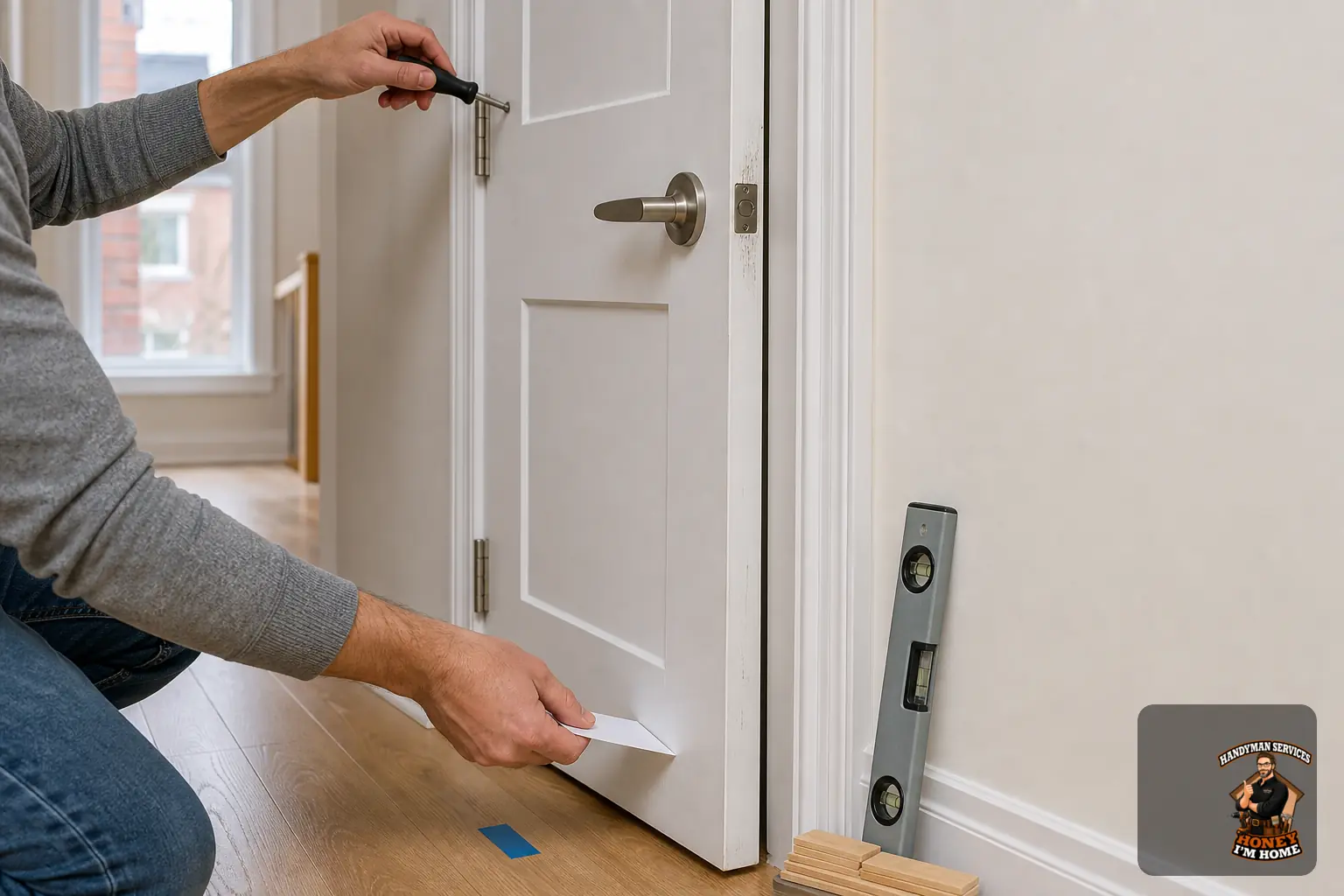
A door that suddenly or slowly starts sticking can be frustrating: it squeaks, drags, or won’t latch properly. Before you reach for power tools or replace the whole door, a few simple checks can reveal the cause and a straightforward fix. This guide walks homeowners through practical first steps to diagnose where and why an interior door is sticking, with simple repairs you can try at home in Toronto, Etobicoke and Mississauga.
Common causes of a sticking interior door
Understanding the likely causes helps you focus your troubleshooting. Typical reasons an interior door sticks include:
- Seasonal or local humidity changes that cause wood to swell.
- Paint or finish build-up where the door meets the frame.
- Loose or worn hinge screws that allow the door to sag or shift.
- A misaligned strike plate or latch that catches on the frame.
- New flooring, rugs, or thresholds that reduce clearance at the bottom of the door.
- Warping of the door slab from moisture or age.
These causes are often independent; a sticking door can be the result of two or more of the above acting together.
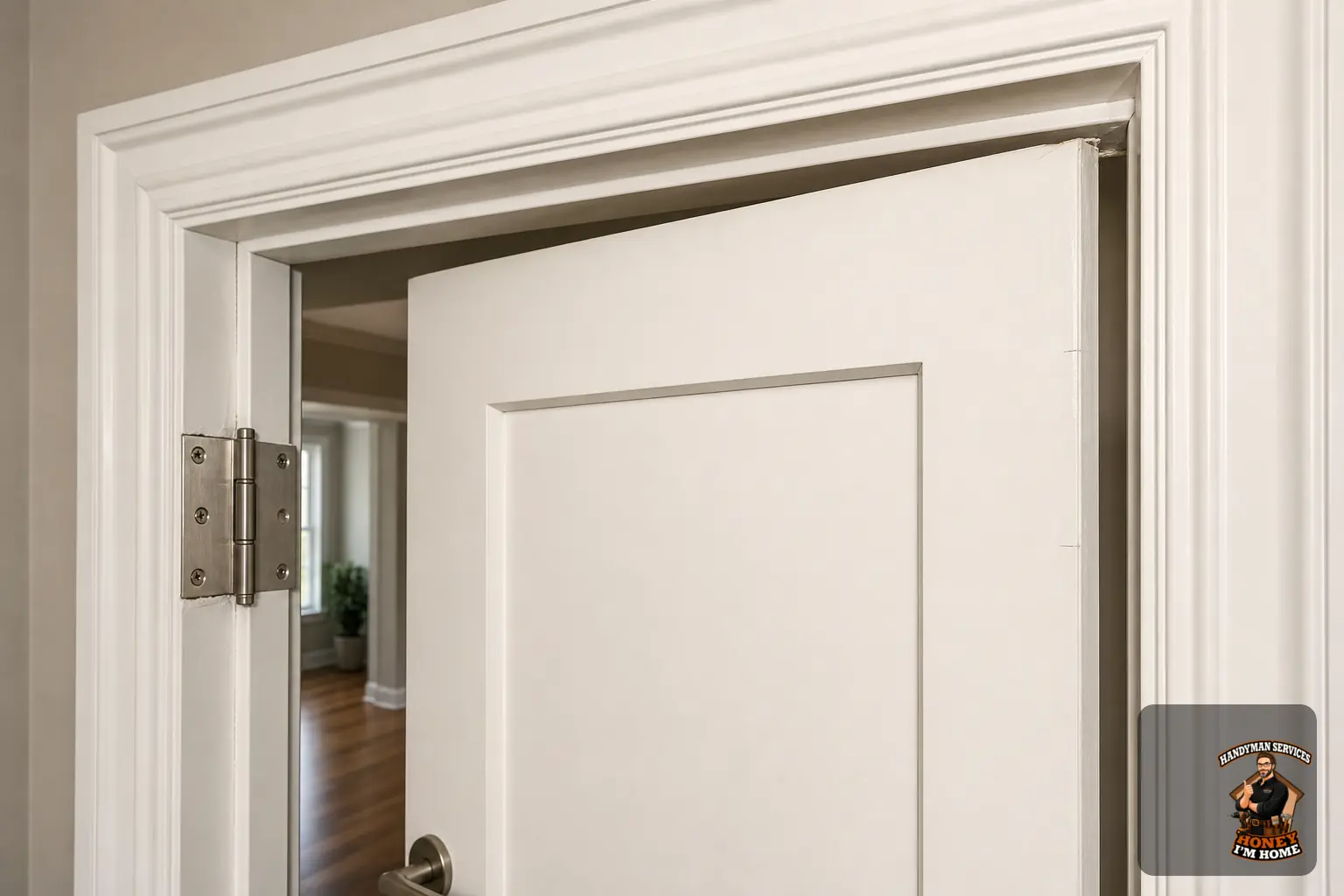
Quick checks before you use tools
Start with quick, non-invasive checks. These will tell you where the door rubs and whether the problem is likely due to hardware, the slab, or something below the door.
- Open and close slowly: Watch where the door hesitates or rubs. Is it at the top, the side, or the bottom?
- Look at the gaps: When the door is closed, check the gap between the door and jamb along the top and both sides. Gaps should be even; uneven gaps point to hinge or jamb alignment issues.
- Mark the rubbing spot: With a pencil, gently draw a light line along the face that touches the jamb or frame. Close the door and open it to see where the pencil mark is worn—this is the contact area.
- Inspect the hinges: Check that hinge screws are tight in both the door and the jamb. Wiggle the handle and observe if the door sags at the latch when open and closed.
- Check the floor area: Look for new flooring, carpeting, or thresholds that might reduce clearance. Sometimes seasonal humidity causes carpets or rugs to tighten and push up into the door’s path.
How to identify where the door is sticking
Pinpointing the exact spot saves time. The sticking location tells you which fix to try first.
- Top of the door rubbing — often indicates the door is sagging toward the latch side or the frame has shifted slightly. Check hinge screws and consider tightening or replacing them with longer screws that reach the stud in the jamb.
- Side of the door rubbing — may mean the door needs planing or the jamb has paint build-up. A pencil mark across the meeting edge will show the rubbing area clearly.
- Bottom of the door rubbing — likely caused by added flooring, a raised threshold, or swelling at the bottom edge of the door. Sometimes trimming the bottom is the simplest fix.
- Door only sticks when closing or latching — often a strike plate or latch alignment issue. The latch might not line up cleanly with the strike opening.
Simple fixes you can try first
Work incrementally: make one small change, then test. This reduces the chance of over-correcting and creating a new problem.
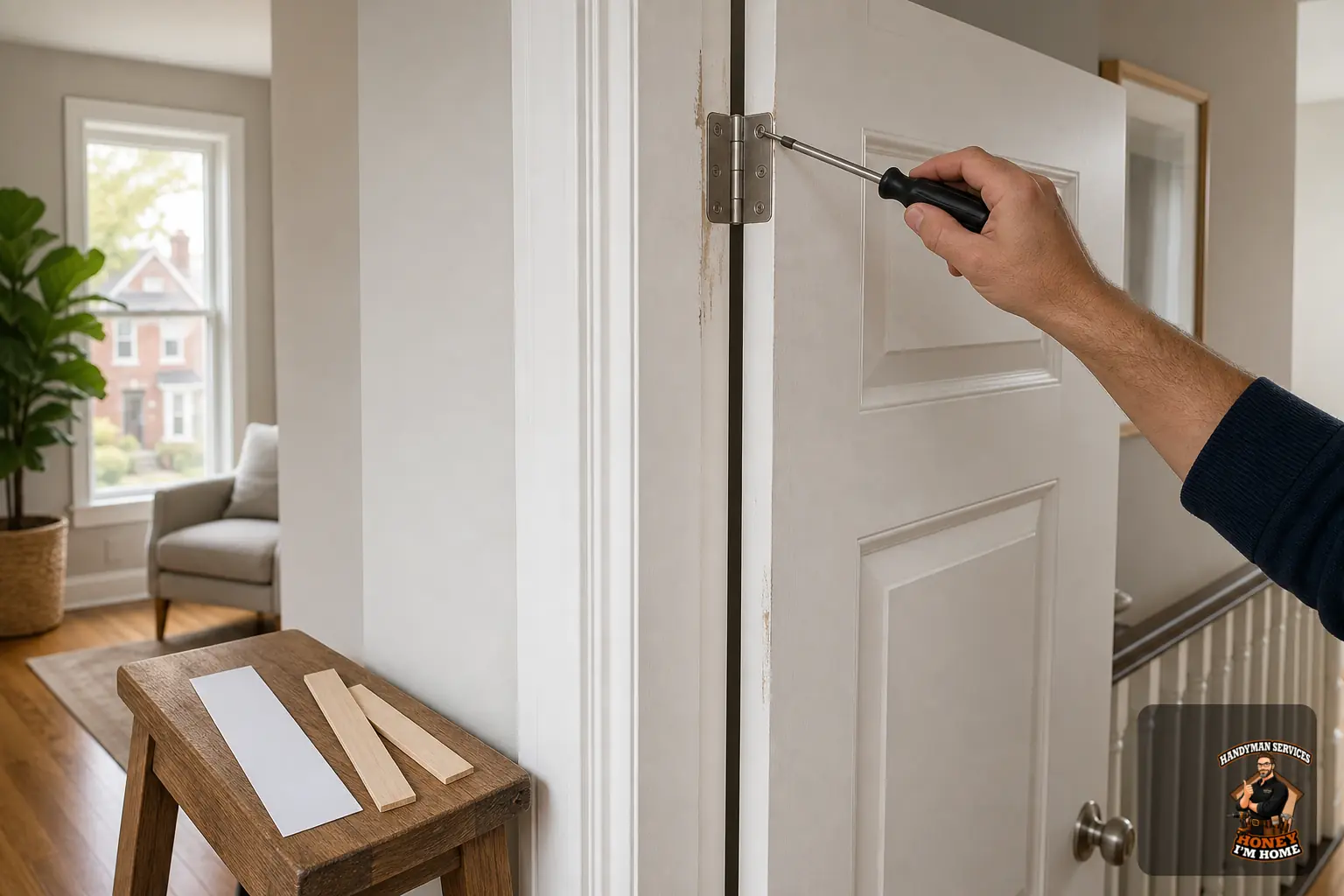
- Tighten hinge screws — Use a screwdriver or drill to tighten all hinge screws. If screws spin without tightening, remove the screw and fill the hole with a wooden toothpick coated in wood glue, then reinsert the screw. For a more secure hold, replace short trim screws with longer screws that reach into the jamb framing.
- Add hinge shims or washers — If the door sags toward the latch, place thin washers or hinge shims behind the lower hinge to nudge the door away from the frame. Small adjustments often solve minor rubbing at the top or side.
- Adjust or reposition the strike plate — If the latch catches on the strike, try loosening the strike-plate screws and moving it up or down slightly. You can also file the strike hole slightly with a metal file to enlarge the opening so the latch seats cleanly.
- Remove paint build-up — If paint has sealed the door edge to the jamb over time, use a utility knife to score the paint joint where the door meets the frame. This can free the door without removing finish from the entire edge.
- Sanding or planing a rubbing edge — When the door rubs along an edge, remove it from the hinges and plane or sand a very small amount from the high area. Mark and remove only 1–2 mm at a time, test fit, and repeat as needed. Always work with the direction of the wood grain, and reseal or repaint the trimmed area to match the finish.
- Trim the bottom slightly — If new flooring or swelling is the culprit, remove the door and trim the bottom by small amounts. A hand plane or belt sander works well; measure clearance needed and remove the minimum amount to restore movement. Refinish the trimmed edge to protect it from moisture.
- Lubricate moving parts — For squeaking or sticky hinges and latch mechanisms, use a dry lubricant such as graphite or a silicone spray. Avoid heavy oils that attract dust and dirt.
Tools and materials you might need
- Screwdrivers (flat and Phillips) and a cordless drill
- Longer screws (short wood screws and 3" or 75 mm screws for hinge reinforcement)
- Utility knife, pencil and masking tape
- Wood plane, sanding block, or belt sander
- Wood shims, thin washers or hinge shims
- Metal file (for strike plate adjustment)
- Graphite powder or silicone lubricant
- Protective gloves and safety glasses
Tests and tips while working
- Work slowly and test the door after every small adjustment.
- If you remove a door, support it properly to avoid dropping or damaging it.
- Keep paint and finish touch-up materials on hand to reseal any trimmed area to protect the wood from moisture.
- When using longer hinge screws, drive one at a time and check alignment before fully seating all screws.
When to get professional help
Many sticking-door problems are straightforward, but some situations call for a pro, particularly if the door or frame is warped, the jamb is out of square, or multiple issues interact. If tightening hinges and simple planing don’t solve the problem, or if you prefer a professional assessment, a door and window specialist can diagnose the cause and recommend solutions. For information on installation and repair services, you can review the related parent guide at /services/door-and-window-installation/. To request an assessment or book assistance, visit /contactruss/.
FAQ: Can I fix a sticking door myself?
Yes, many sticking doors can be fixed with basic tools and a few careful adjustments. Start with the simple checks and tighten hinge screws before attempting trimming. If you’re unsure or the door has significant warping, a professional can help.
FAQ: Why does my door only stick in winter?
Seasonal changes in humidity and temperature cause wood to expand in damp conditions and contract when dry. In many Canadian homes, doors may stick in humid months or after changes in indoor humidity levels. Addressing the specific rubbing points and improving clearance usually helps.
FAQ: Will lubricating the hinges stop a door from sticking?
Lubrication can reduce squeaks and make movement smoother, but it won’t fix rubbing caused by misalignment, swelling, or paint build-up. Combine lubrication with visual checks and small mechanical adjustments for the best result.
By following these diagnostic steps and working incrementally, most homeowners can identify why an interior door sticks and apply a simple solution. If you need professional evaluation or installation services, see /services/door-and-window-installation/ and consider contacting a specialist through /contactruss/ for assistance.