
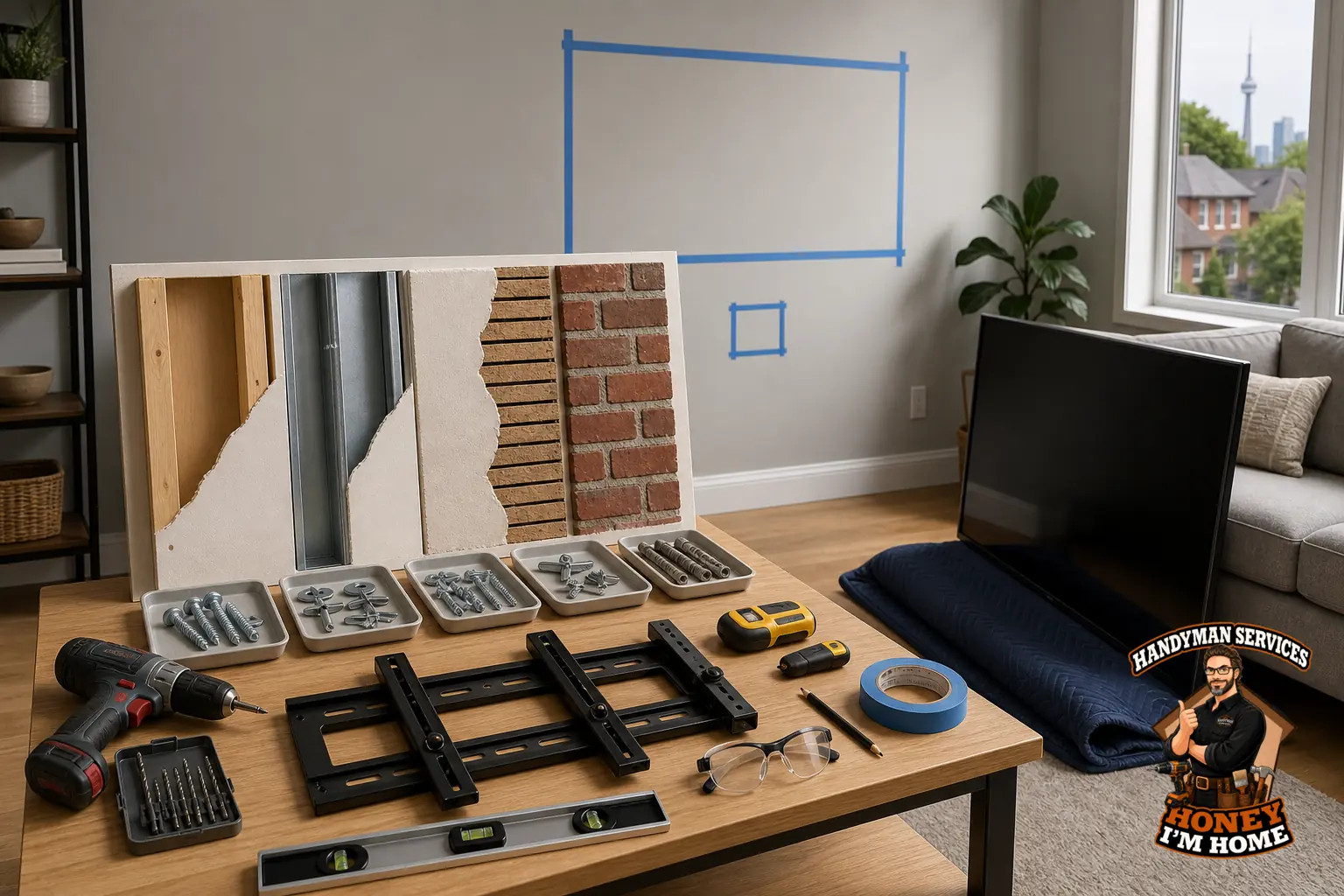
Wall type dictates how I anchor a TV bracket, what fasteners I choose, and whether I’ll need to expose backing or change the mounting strategy. Hitting a wood stud, dealing with metal studs, working around plaster-and-lath or fastening to masonry all lead to different, safer attachment methods and sometimes to a surface-mounted solution instead of hidden anchors.
The common wall types I encounter and how they change the job
I see a handful of distinct wall builds that change how I approach a TV mount. My assessment starts with identifying the finish and the substrate beneath it, because the finish is rarely what carries the load.
Drywall over wood studs: This is the job I’m most comfortable with — if I can locate a solid timber stud, I use a stud-mounted bracket and heavy fasteners driven into the wood. If studs aren’t available at the mounting line, I lean toward distributed anchoring strategies or different mounting options to avoid overstressing the drywall.
Drywall over metal studs or furring channels: Metal studs don’t take the same screw types or pullout strength as wood. I look for continuous support, use anchors designed for thin-gauge sections, or change the bracket orientation so loads transfer to multiple fasteners. Sometimes I use a backing plate that spans several studs when access from the other side is possible.
Plaster-and-lath walls: Older plaster can be brittle and the lath behind it can be thin or spaced irregularly. I inspect for plaster delamination and avoid relying on the plaster face for support. Where a stud or solid blocking isn’t present, I plan to expose a small area to confirm what’s behind the plaster before committing to a bracket that needs concentrated anchoring.
Masonry and concrete: Brick or concrete walls are very different — they hold anchors well, but they require the right type of masonry anchor and a drilling approach that respects the finish. I check the surface condition and consider whether a through-bolt into a solid backing or an appropriate masonry anchor is the safer option for a heavy TV.
Stucco or thin veneers: These finishes are usually a surface layer over a backup substrate. I treat the finish as non-structural and trace load paths back to whatever substrate supports it. That often means finding a stud, block, or masonry behind the veneer and planning anchors there.
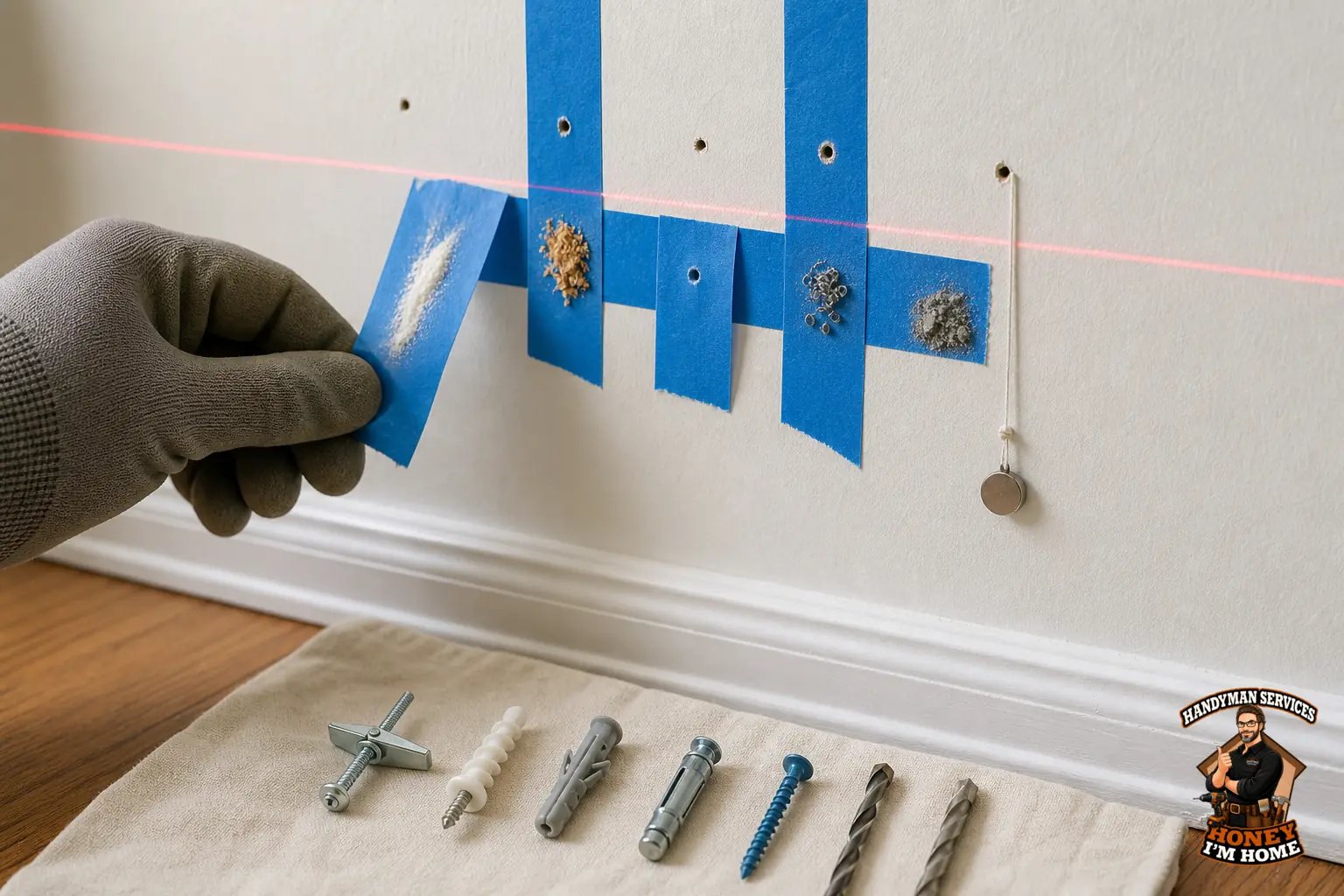
What I check on site before I pick fasteners
My standard on-site routine separates assumptions from what the wall actually is. I look at trim, outlet placement and baseboards for clues, press and tap the wall surface to hear the difference between hollow and solid, and use detection tools to map likely stud lines. I never assume a stud is exactly where the papered or painted finish suggests.
I also examine previous repairs and paint layers. A patched area or thick skimming often tells me there was earlier work that changed the original assembly. That might mean hidden blocking, or it might mean thin skim over a brittle surface — both change anchoring choices.
Access is another practical concern. In older detached houses I often have the option to chase from a closet or attic to install blocking behind a plaster wall. In apartments or condos, I frequently don’t have that option, so I favour surface-mounted cleats or bracket layouts that spread the load across multiple fasteners that reach real backing.
Finally, I look at how the owner wants the finished result to look. If they’re set on hidden wires, I discuss the trade-offs and safety of routing cords, and I avoid running cords inside walls myself; instead I suggest approved cable-management products or surface raceways if concealment is required without invasive work. If concealing wires is not a priority, a simpler route often reduces the number of unknowns.
How the character of High Park homes changes my decisions
The local housing mix matters where I work. The City’s profile for the High Park area notes that a large share of dwellings were built before 1960 and that the neighbourhood contains both older houses and substantial apartment and condominium stock. That combination means I’ll often see original plaster-and-lath and later renovations within a few streets of one another.
Practically, that means I approach each High Park job with an eye for diversity: in an older detached house I prepare for plaster, original trim and possible access through attics or closets to add blocking. In nearby condos I anticipate drywall over metal studs or concrete party walls and plan for anchors and mounting layouts that work with limited access behind finishes. I don’t assume one solution fits all properties in the area; the neighbourhood facts make me choose the method that matches the building type and actual wall assembly.
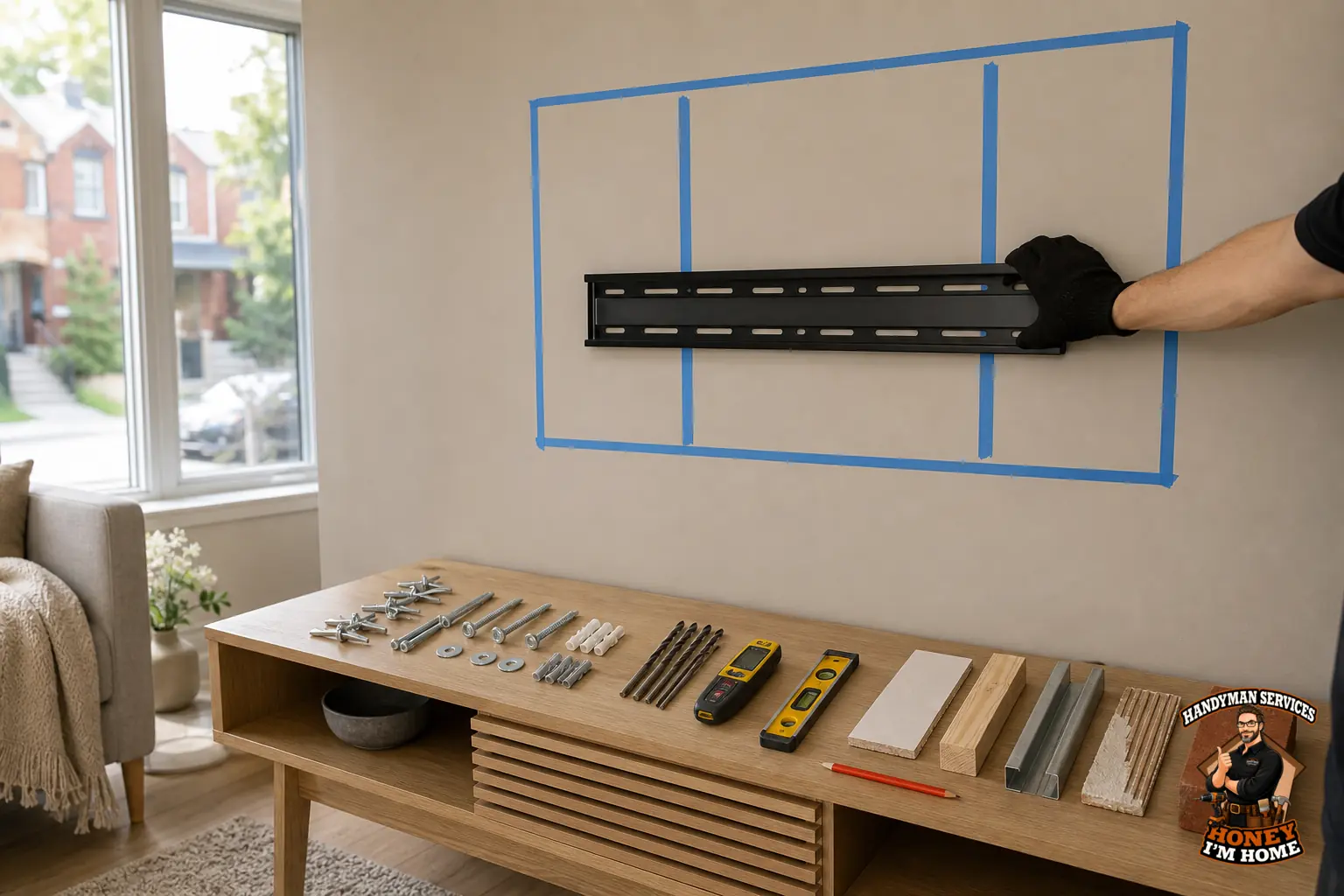
When I change the mounting plan on site
Sometimes what I find makes me change course. If plaster is thin or delaminating, I’ll stop and open a small inspection access to see the lath and blocking conditions rather than guess. If metal studs are lightweight or spaced so they won’t accept the bracket load in the preferred orientation, I shift to a method that spreads the load or mounts to a solid backing.
In apartments with concrete back walls I often find the neatest result is to attach directly to the masonry with the right anchors rather than trying to chase behind finishes. When I can’t access the wall cavity, I prioritise mechanical methods that fasten to visible solid elements or use a surface-mounted support that keeps the TV secure without hidden anchors.
Practical things you can do before I arrive
- Clear the area and point out any visible patches or odd trim — that helps me focus the inspection.
- Note where outlets and baseboards sit relative to your preferred screen height; outlets often reveal stud locations.
- Decide how important concealed wiring is to you. If you want hidden wires, tell me up front so I can plan for surface or in-wall options and explain trade-offs.
If you want me to look at a tricky wall or you’d like a site visit to confirm the best approach, book an inspection through /contactruss/ and I’ll give you a clear, on-site recommendation. If you prefer to read more about the services I offer, head to /services/tv-and-shelving-mounting/ for an overview.
What I won’t do and why
I won’t rely on a fragile finish to carry a concentrated load. I also avoid routing power cords inside walls; that’s a concealment approach I recommend against unless the homeowner arranges for appropriate qualified trades to handle in-wall power work. My goal is a secure long-term mount that doesn’t threaten the finish or the bracket’s attachment.
When a wall assembly looks uncertain, I’ll either create a small inspection opening or recommend a mounting option that spreads the load across several anchors or attaches to visible solid backing. That’s safer than driving fasteners into an unknown, brittle surface.
Short note from a customer: "This is a person whose number is worth saving." — Google review. See proof at /#awards.
How soon can you come to inspect my wall?
I usually schedule based on availability and the complexity of the request; contact me through /contactruss/ to arrange a convenient time.
Can you hide my TV wires inside the wall?
I won't run power cords inside walls myself and I avoid concealed wiring without the appropriate trades; I can recommend safe, visible or low-impact concealment options.
Do different TVs change your approach?
Yes. Screen size and mount type influence anchor layout and support decisions, so I inspect the wall and the TV before choosing fasteners.